
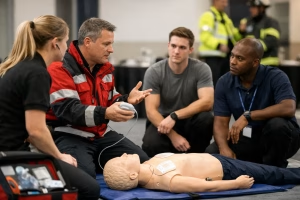
A medical incident at an event rarely arrives with warning. It might be a spectator collapsing near the barrier, a contractor suffering a burn during set-up, or a crowd movement issue that escalates faster than expected. Emergency response training for event teams gives staff the confidence to act early, communicate clearly and support a safe outcome while professional responders are en route.
For organisers, venue operators and event managers, that training is not just a useful extra. It sits alongside planning, risk assessment and public safety management. The quality of the response in the first few minutes can affect the casualty, the wider crowd, the emergency services handover and the overall control of the event.
Contents
- 1 Why emergency response training for event teams matters
- 2 What event teams need to be trained to do
- 3 Choosing the right level of training
- 4 Building emergency response training into event planning
- 5 The balance between accredited courses and site drills
- 6 Common mistakes in emergency response training for event teams
- 7 What good training looks like in practice
Why emergency response training for event teams matters
Events bring together temporary workplaces, changing hazards and large numbers of people. Even a well-run event can involve slips, trips, heat stress, alcohol-related incidents, cardiac emergencies, fire risks, vehicle movements, temporary structures and safeguarding concerns. What makes events different from a standard workplace is pace. Conditions change quickly, teams are often drawn from different departments or contractors, and not everyone on site will know who is responsible for what.
That is why emergency response training needs to be practical and role-based. A front-of-house steward does not need the same depth of clinical intervention as a designated first aider or event medic, but they do need to recognise a problem, raise the alarm properly, protect the casualty and direct help to the right place. Security staff may need stronger incident management and communication skills. Supervisors may need to coordinate access routes, control bystanders and record key details for escalation.
Training works best when it reflects how events actually operate, rather than relying on generic examples. A classroom explanation of emergency procedures has value, but teams usually perform better when they have practised realistic scenarios linked to their venue, crowd profile and event type.
What event teams need to be trained to do
A capable event team does not need every member of staff to be a clinician. It needs people who understand their role under pressure. In practice, that means recognising common emergencies, knowing how to call for help, applying immediate first aid within the limits of their training and supporting wider incident procedures.
For many events, core competencies should include casualty assessment, CPR, AED awareness or use where devices are available, management of choking, severe bleeding and unconscious casualties, plus clear communication with emergency services. Teams should also understand site-specific issues such as access points, rendezvous locations, radio procedures and who has decision-making authority if an incident develops.
There is also a difference between compliance and preparedness. A business may meet its minimum duty by appointing a small number of qualified first aiders, but that does not always mean the wider event team is ready. If one trained person is tied up elsewhere on site, the first person on scene is often a steward, marshal, technician or volunteer. Giving those staff a practical response framework can make the whole operation more resilient.
Choosing the right level of training
The right training package depends on the type of event, the expected attendance, the audience profile and the site layout. A village gala, an indoor conference and a multi-day outdoor sporting event do not carry the same risks. Nor do they require the same staffing model.
For lower-risk events, a combination of appointed first aiders and basic emergency awareness for the wider team may be enough. For larger or higher-risk environments, organisers may need a broader mix of workplace first aid, basic life support, haemorrhage control, casualty handling awareness, fire marshal instruction and incident communication training. If the event includes contractors, water-based activity, remote areas or vulnerable groups, the training needs to reflect that.
This is where bespoke delivery becomes useful. Off-the-shelf training can cover the fundamentals, but event teams often benefit from courses shaped around actual duties. A ticketing team has different likely exposures from a rigging crew. A sports event may need greater focus on traumatic injuries. A family event may place more emphasis on paediatric considerations, lost child procedures and public reassurance.
Building emergency response training into event planning
Training should be built into planning early, not added in the final week before gates open. The strongest event response arrangements are usually the ones where training links directly to the event risk assessment and emergency plan.
Start by identifying credible incidents rather than trying to plan for everything equally. That may include cardiac arrest, falls from height during build, crowd surges, severe bleeding, burns, fire alarm activation, missing persons or adverse weather escalation. Once those risks are identified, it becomes easier to decide who needs what training and what equipment or procedures need to support them.
It also helps to map responsibilities clearly. Teams should know who provides first aid, who contacts emergency services, who meets ambulance crews, who controls access routes and who communicates with the public if needed. Confusion during an incident usually comes from unclear roles rather than lack of goodwill.
Short refreshers before the event can be just as valuable as formal qualification courses completed months earlier. Staff may already hold valid certificates, but site-specific briefings and scenario rehearsals bring that knowledge back into active use. Even a twenty-minute run-through of radio calls, casualty location references and escalation points can improve response times.
The balance between accredited courses and site drills
Formal qualifications matter. They provide recognised standards, documented competence and a clear training baseline. For employers and organisers, that matters for compliance, due diligence and staff confidence. In many cases, accredited first aid or fire safety training is the right starting point.
However, qualification alone is not the whole answer for event operations. People can pass a course and still struggle with the practical realities of a live venue if they have never applied those skills in context. Site drills help close that gap. They test whether staff can find the AED quickly, whether radio language is understood, whether emergency vehicles can access the agreed route and whether supervisors can manage the wider scene.
The most effective approach is usually a combination. Accredited training gives the team recognised skills. Event-specific exercises show whether those skills can be used under realistic conditions. One without the other can leave gaps.
Common mistakes in emergency response training for event teams
One of the most common mistakes is training only a small core of staff and assuming everyone else will know what to do. In reality, incidents are often first seen by whoever happens to be nearby. Basic emergency awareness across the wider team is often a sensible investment.
Another issue is treating all events the same. A training plan copied from last year may not fit a different venue, season or audience. Outdoor events in Scotland, for example, may need stronger emphasis on environmental exposure, access difficulties and changing weather conditions.
There is also a tendency to focus heavily on medical response while giving less attention to communication and coordination. Yet many event incidents become harder to manage because information is delayed, inaccurate or passed to the wrong person. A team that can report clearly, guide responders and preserve access can be as important as the first aid itself.
Finally, refresher training is often left too long. Skills fade, particularly those that are rarely used. CPR, AED operation, casualty assessment and emergency radio procedure all benefit from periodic practice.
What good training looks like in practice
Good training is clear, relevant and proportionate to the event risk. It explains legal and operational responsibilities without burying staff in theory. It includes hands-on practice, realistic scenarios and straightforward decision-making models that people can remember when pressure rises.
It should also recognise that different staff groups need different outcomes. Managers may require stronger command and coordination skills. Front-line staff may need confidence in basic intervention and escalation. Contractors may need a briefing that aligns their own procedures with the event plan. When training is matched to role, people are more likely to retain it and use it correctly.
For organisations running repeated events, there is value in building a training cycle rather than approaching each event from scratch. Core qualifications can be scheduled annually or as required for certification periods, with shorter seasonal refreshers and event-specific briefings layered on top. That approach is often more manageable and gives consistency across the team.
Providers with experience across first aid, fire safety, mental health at work and specialist emergency response can also help organisations build a more joined-up programme. For many event teams, the real need is not a single course but a practical package that reflects the risks of the operation and the level of responsibility carried by different staff.
If your event team is expected to protect the public, support contractors and respond calmly when something goes wrong, training should reflect that reality. The best time to build confidence, competence and clear procedures is before the crowd arrives, not when the radio call comes in.