
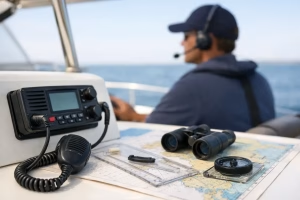
If you carry a fixed or handheld marine radio and have never been formally trained to use it, that gap matters most when something goes wrong. A vhf radio course is not just about learning the buttons on a set. It is about using the radio correctly, legally and with enough confidence to get clear information across when time is tight.
For anyone operating on coastal waters, inland routes connected to the sea, support boats, club craft or small commercial vessels, radio procedure is a practical safety skill. The marine environment is busy, regulated and often unforgiving of poor communication. A misunderstood call, a missed distress alert or a basic error with channel use can create confusion at exactly the wrong moment.
Contents
Who a vhf radio course is for
The most obvious candidates are leisure boaters, yacht crew, powerboat users and anyone taking command of a vessel fitted with VHF equipment. In practice, the course is also relevant to sailing clubs, rescue boat crews, marine instructors, harbour users and staff supporting water-based activities.
Some people attend because they are buying their first boat and want to do things properly from the outset. Others have used radios informally for years and realise they were never trained in standard procedure. That second group is common. Experience on the water does not always mean current knowledge of correct radio operation, Digital Selective Calling, or legal requirements.
If your role includes responsibility for passengers, trainees or club members, formal training becomes even more important. Good radio discipline supports safe operations across the whole team, not just the person holding the handset.
What a VHF radio course covers
A proper marine VHF course is focused on real operational use. That includes routine communication, but it also covers urgent and emergency traffic where accuracy is essential.
Radio procedure and channel use
Candidates learn how marine VHF works, how to select the correct channel, and how to keep transmissions brief and clear. That sounds straightforward until you are dealing with background noise, pressure, weather and other traffic on the air. Standard phraseology exists for a reason. It reduces ambiguity.
You will usually cover calling another vessel or coast station, acknowledging messages, changing channels correctly and understanding when to keep clear of working channels. The course also addresses radio checks, power settings and good operating practice to avoid unnecessary congestion.
Distress, urgency and safety messages
This is one of the key parts of the course. Knowing the difference between Mayday, Pan Pan and Securite is not a technical extra. It is central to using a marine radio responsibly.
Candidates are taught when each type of message applies, how to structure the transmission, what information must be included and how to respond if another station is in difficulty. Training usually includes simulated scenarios so learners can practise speaking under a little pressure rather than only reading a script on paper.
DSC functions and modern radio equipment
Most modern fixed VHF sets include Digital Selective Calling. Many users know the distress button is there but have only a limited idea of how the wider DSC functions work. A course covers the practical use of these systems, including MMSI numbers, individual and group calling, and the link between radio equipment and GPS position data.
This is where informal learning often falls short. Someone may know how to turn the set on and change channel, but not how to set it up properly or use DSC features as intended. That can limit the safety benefit of the equipment you already have on board.
Why formal training matters
Marine radio is regulated, and there is a difference between casual familiarity and recognised competence. A course gives structure, assessment and a standard that can be evidenced.
For many boaters, the legal side is one of the reasons for booking. Depending on the equipment and area of operation, there are licensing requirements tied to radio use. A recognised course helps ensure that the operator understands both procedure and responsibility.
There is also a strong practical case. In training, people quickly spot the habits they have picked up from hearsay, old practice or watching others. Some of those habits are harmless. Some are not. Speaking too fast, missing key details, using the wrong priority level or misunderstanding DSC alerts can all affect the outcome of an incident.
The value of formal instruction is that it replaces assumption with standard practice.
What to expect on the day
Most learners are looking for a course that is clear, efficient and relevant to the type of boating they actually do. A well-run course should not bury simple operating tasks under unnecessary theory, but it should still explain why procedures are set out in a particular way.
There is usually a mix of classroom instruction, guided examples and practical exercises using radio equipment or simulated sets. Learners work through routine calls first and then build towards urgency and distress communications. By the time assessment comes around, the aim is that the process feels familiar rather than intimidating.
People often worry that the radio language will be hard to remember. In reality, most of it becomes manageable once you understand the structure. Training helps because it turns what looks like jargon into a logical sequence. You are not expected to become a career radio operator. You are expected to communicate clearly and correctly in a marine setting.
Choosing the right VHF radio course provider
Not every training provider delivers with the same standard of instruction or the same understanding of operational boating. That matters. Radio training should be compliant, current and taught by someone who can explain procedure in plain language.
Look for recognised accreditation, clear course information and an approach grounded in practical use. For many learners, location and delivery also matter. If you are booking as an individual, a scheduled course may be the simplest option. If you are organising training for a club, centre or marine team, a private course may be more efficient and better suited to your operating context.
There is also a difference between simply passing an assessment and leaving able to use the radio properly. The better courses are designed to achieve both. At SPR Training, that practical standard is central to how regulated and specialist safety training is delivered across Scotland.
Common questions before booking a vhf radio course
One of the most common questions is whether beginners are suitable. Yes – absolutely. The course is designed to take learners through the operating principles and procedures step by step.
Another question is whether experienced boaters need it if they have been using a radio for years. Often, yes. Experience helps, but it does not automatically cover the current procedure, DSC use or assessed standard expected on a recognised course.
People also ask whether handheld radios make the course less necessary. They do not. A handheld set is still a marine radio and still requires the operator to use the correct channels, formats and emergency procedures. In some situations, handheld equipment is a useful backup. It is not a substitute for training.
Finally, there is the question of relevance for inland users. That depends on where you operate and what equipment you carry. If your boating brings you into coastal waters, tidal areas or marine environments where VHF is in use, the course becomes much more directly applicable.
The benefit goes beyond compliance
The strongest reason to take a VHF radio course is not paperwork. It is confidence built on correct practice. When a marina call needs to be made, when visibility drops, when another vessel reports a problem, or when your own passage does not go to plan, you want radio use to feel routine rather than hesitant.
That confidence also improves crew management. A skipper or operator who understands radio procedure properly can brief others more effectively, allocate tasks clearly and avoid the muddle that happens when nobody is quite sure what should be said or done.
Good training has a practical effect long after the certificate is issued. It makes radio communication cleaner, calmer and more reliable. On the water, that is never a small thing.
If you are carrying marine VHF equipment, the sensible next step is simple: get trained before you need the radio for real.