
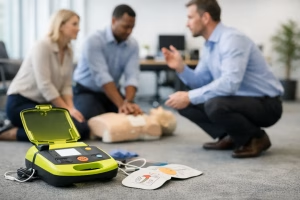
A cardiac arrest in the workplace does not leave much room for hesitation. The first few minutes matter, and that is exactly why a clear workplace defibrillator training guide should sit alongside your wider first aid arrangements rather than be treated as a separate extra.
For many employers, the question is not simply whether to install an AED. It is whether staff will recognise cardiac arrest quickly, know how to use the device under pressure, and work confidently as a team until the ambulance service arrives. The equipment is designed to be used by non-clinicians, but good outcomes still depend on practical training, clear procedures and regular refreshers.
Contents
- 1 What a workplace defibrillator training guide should cover
- 2 Is defibrillator training a legal requirement?
- 3 Who needs workplace defibrillator training?
- 4 What staff should learn in practical AED training
- 5 Choosing the right training format
- 6 Equipment checks and ongoing readiness
- 7 Common mistakes when rolling out a workplace AED
- 8 Building confidence, not just compliance
What a workplace defibrillator training guide should cover
At a minimum, a workplace defibrillator training guide should explain when an AED is needed, who is likely to use it, where it is kept, how it is checked and how staff are trained to respond. It should also tie into your existing first aid needs assessment rather than sit in isolation.
In most settings, the training requirement is straightforward. Staff need to recognise an unresponsive casualty who is not breathing normally, call 999, start CPR and retrieve the AED without delay. They also need to understand that the device analyses the heart rhythm and gives voice prompts, which helps reduce panic for first-time users.
That said, training depth should reflect risk. A small office with low footfall may only need a proportion of staff trained in basic life support and AED use, supported by clear awareness for everyone else. A factory, leisure venue, transport yard or remote outdoor site may need wider coverage, more frequent refreshers and stronger shift planning so there is always someone competent on site.
Is defibrillator training a legal requirement?
In the UK, there is no general law that says every workplace must have an AED or that named staff must hold a stand-alone defibrillator certificate. The legal position is more practical than that. Employers must provide suitable first aid arrangements based on their first aid needs assessment, considering hazards, workforce size, shift patterns, public access and emergency medical response times.
This is where some organisations get caught out. They install a defibrillator for reassurance or public confidence, but they do not properly brief staff, assign checks or include the device in emergency planning. If an AED is present, staff should know it is there and understand how it fits into the response.
For many employers, the sensible route is to build AED use into regulated first aid or basic life support training. That gives staff context, not just button-pressing familiarity. They learn casualty assessment, CPR quality, communication with emergency services and safe handover. The AED is part of the sequence, not a stand-alone gadget.
Who needs workplace defibrillator training?
The short answer is that more people benefit from awareness than many businesses assume. In a cardiac arrest, the nearest available person may be the one who starts the response, even if a designated first aider is on another floor, off site or dealing with another incident.
Formal practical training is usually most appropriate for first aiders, fire marshals who may help coordinate an evacuation response, site supervisors, security staff, reception teams, gym or sports personnel, and managers responsible for lone or remote workers. In customer-facing workplaces, it also helps to train staff who are most likely to meet visitors, contractors or members of the public.
There is also a strong case for simple awareness across the wider workforce. Staff do not all need the same level of competence, but they should know where the AED is, how to raise the alarm and how to support the trained responder. In practice, an effective response is often a team effort.
Matching training to your environment
An office-based employer in central Glasgow may plan around rapid ambulance access and a predictable working pattern. A rural estate, forestry team or marine operator may have very different response times and therefore a greater need for immediate intervention on site. The same principle applies to larger premises where walking time to fetch equipment can eat into those critical first minutes.
This is why a standard package does not always fit. The right level of training depends on occupancy, travel distances within the site, existing first aid cover and the likelihood of high-risk visitors or strenuous physical activity.
What staff should learn in practical AED training
Good training is hands-on and scenario-based. People remember what they have physically practised far better than what they have only read in a policy.
Staff should be taught how to recognise cardiac arrest, check responsiveness and breathing, summon emergency help and begin CPR without delay. They should then practise switching on the AED, attaching pads correctly, following the prompts, standing clear when instructed and continuing CPR between analyses.
Just as important is the surrounding decision-making. Learners should understand pad placement where there is chest hair or moisture, what to do if the casualty has a pacemaker bulge, and how to manage the scene so no one interferes with the shock cycle. They should also be prepared for the emotional reality that the casualty may be a colleague, visitor or child rather than a training manikin.
A useful course will cover post-incident steps as well. That includes preserving dignity, reporting the incident, replacing pads if used, checking the device after deployment and supporting affected staff. Employers often focus on the dramatic part of the response and forget the practical follow-through.
Choosing the right training format
There is no single best format for every business. Some employers need accredited first aid training that includes AED use as part of a wider compliance requirement. Others need a focused session for staff who already hold a current first aid qualification but want an AED update.
On-site delivery is often the most practical option for larger teams because it allows training around your own equipment, layout and emergency arrangements. That tends to make learning more relevant. Open courses can suit smaller employers or individuals who need recognised certification without arranging a private session.
The right provider should be able to explain what the training covers, whether it is accredited, how long it lasts and which sectors it is designed for. For Scottish employers with mixed operational needs, that flexibility matters. A provider such as SPR Training can deliver both regulated first aid and role-specific workplace instruction, which is useful when your team includes office staff, site crews and higher-risk responders.
Equipment checks and ongoing readiness
Training is only part of the picture. An AED that is locked away, out of battery or missing consumables can create a false sense of security.
Your guide should name a responsible person for routine checks. That usually means confirming the device status indicator is normal, the pads are in date, the battery expiry is logged, the rescue kit is complete and signage remains visible. If the AED is in a cabinet, access arrangements must be clear to staff at all times, including out-of-hours operations.
It also helps to record exact device location in your emergency plan and induction material. On larger premises, consider whether a second unit is needed. One AED at reception may sound sufficient until you map the travel time to an upper floor, warehouse bay or sports area.
Refreshers matter more than most employers expect
Skills fade quickly when they are rarely used. Staff do not need constant retraining, but they do need periodic refreshers and drills. A short practical update can make a noticeable difference to confidence, especially for people who have never faced a real collapse.
Refresher intervals depend on your setting, staff turnover and training history. If you have seasonal workers, rotating shifts or agency personnel, more frequent sessions may be sensible. The objective is not box-ticking. It is making sure somebody can act decisively on the day it counts.
Common mistakes when rolling out a workplace AED
The most common mistake is assuming the device does all the work. It is designed to guide the user, but someone still needs to recognise the emergency, fetch it quickly and deliver effective CPR.
Another frequent issue is poor visibility. If staff do not know the AED exists, where it is stored or who is meant to respond, the investment loses much of its value. The same goes for overcomplicated arrangements, such as cabinets that few people can open or procedures that require managerial approval before the device is used.
Finally, employers sometimes train one or two keen individuals and stop there. That can work in a very small workplace, but it is fragile. Annual leave, sickness, travel and shift gaps can leave the site exposed. A broader, proportionate training plan is usually more resilient.
Building confidence, not just compliance
A good workplace defibrillator training guide is really about readiness. It helps employers connect equipment, people and procedure so the response is fast, calm and competent.
If you are reviewing your first aid provision, treat defibrillator training as part of operational planning rather than a separate purchase decision. The strongest setup is the one your staff can actually use under pressure, in your environment, with your risks in mind. That is where practical training earns its place.