
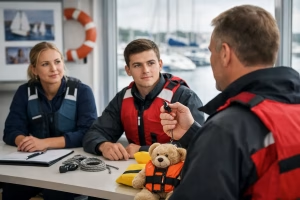
A wet changing room, a last-minute crew swap, a young sailor upset after a session – these are ordinary parts of watersports delivery, but they are also the moments where poor judgement can create safeguarding risk. A safeguarding course for sailing instructors is not just about policy. It is about recognising concerns early, responding properly, and creating a safer environment on and off the water.
For sailing clubs, training centres, freelance instructors and shore teams, safeguarding sits alongside seamanship, first aid and risk assessment. You can run a technically strong session and still fall short if staff are unclear on boundaries, reporting, supervision or how to deal with a disclosure. That is why role-specific training matters.
Contents
- 1 Why a safeguarding course for sailing instructors matters
- 2 What the course should cover
- 3 Who should take it
- 4 Safeguarding in sailing has its own pressures
- 5 Choosing the right training provider
- 6 How often should safeguarding training be refreshed?
- 7 What clubs and centres should do alongside training
- 8 A practical investment, not a box-tick
Why a safeguarding course for sailing instructors matters
Sailing instruction often involves close supervision, changing environments, transport arrangements, physical assistance and mixed-age groups. Instructors may be working with children, teenagers, vulnerable adults, visiting schools, family groups or participants with additional support needs. Those settings create real safeguarding responsibilities that go beyond general good conduct.
A safeguarding course for sailing instructors helps staff understand what safe practice looks like in context. That includes instructor-to-student ratios, appropriate physical contact, use of images, communication with parents and participants, and what to do if a concern is raised during a course or club activity. The value is practical. It reduces uncertainty when something does not feel right.
It also helps organisations show that safeguarding is being treated as a live operational duty, not a document in a folder. For clubs and centres, that can support safer recruitment, internal procedures and a clearer standard of care across volunteer and paid teams.
What the course should cover
The right course should be specific enough to reflect marine instruction, but broad enough to support sound decision-making in different settings. A useful programme usually starts with the basics of safeguarding and welfare, including the legal and professional responsibilities instructors carry when working with children and adults at risk.
From there, the course should deal with recognising signs of concern. That may include behavioural changes, injuries, inappropriate interactions, poor boundaries, neglect, bullying, online communication issues, or concerns raised by another child, parent or member of staff. In a sailing environment, the instructor may only see a participant for a few hours at a time, so the training needs to help them notice patterns without encouraging guesswork or overreach.
A strong course should also cover response procedures. Instructors need to know how to listen, how to record what has been said, how to avoid asking leading questions, and when to pass concerns to a designated safeguarding lead or external agency. This is one of the most important parts of training because hesitation or informal handling can make a situation worse.
Good content should also include safer working practice. That means expectations around lone working, changing facilities, social media contact, photography, lifting and assisting participants, transporting young people, and dealing with incidents at regattas, training camps or off-site events. These are the grey areas where staff often need the clearest guidance.
Who should take it
The obvious audience is dinghy and keelboat instructors, senior instructors and club coaches. In practice, safeguarding training is just as relevant for assistant instructors, powerboat safety cover crew, shore-based staff, volunteers and committee members with welfare responsibilities. If someone has regular contact with participants or any role in supervising activity, they should understand the safeguarding framework they are working within.
The level of training may vary. A designated safeguarding or welfare officer will usually need more detailed instruction than a seasonal assistant. Equally, an experienced instructor is not automatically up to date. If they qualified years ago and have not refreshed safeguarding knowledge since, there may be gaps around digital communication, reporting pathways or current expectations on record keeping.
For clubs using a mix of staff and volunteers, consistency matters. A course works best when everyone understands the same reporting route and standards of behaviour. That avoids the common problem where one part of the team treats a concern seriously and another dismisses it as a misunderstanding.
Safeguarding in sailing has its own pressures
Marine settings are not the same as classroom or office environments. Sessions are weather-dependent, fast-moving and often delivered in open public spaces with limited privacy. Staff may need to make quick decisions while also managing safety afloat. That can make safeguarding concerns harder to spot and harder to handle well in the moment.
There is also the issue of trust and authority. Sailing instructors are often seen by children and parents as highly capable adults in charge of specialist equipment and risk-based activity. That authority is necessary, but it needs clear boundaries. Training should reinforce that professionalism includes how instructors speak to participants, how they manage discipline, and how they maintain appropriate relationships over time.
Residential events and multi-day training add another layer. Overnight supervision, fatigue, rooming arrangements, medication, personal care and social time all increase the need for clear safeguarding controls. A generic course may touch on those matters, but a course that understands sport and outdoor instruction is usually more useful.
Choosing the right training provider
Not every safeguarding course will suit a sailing club or watersports centre. Some are heavily theory-based and give little attention to operational reality. Others are so general that staff leave with broad awareness but no confidence about what to do in actual scenarios.
A better option is training that combines compliance with application. Look for a provider that understands regulated training, duty of care and sector-specific risk. The course should explain principles clearly, but it should also test how those principles apply to supervision afloat, changing areas, instructor conduct, incident reporting and participant welfare.
Delivery format matters as well. Face-to-face training can be particularly effective where clubs want discussion around local procedures, existing policies or recent issues. For larger organisations, private group delivery can help align volunteers, instructors and welfare leads in one session. For some learners, an online option may be practical, but it should still be structured, current and relevant.
Across Scotland, organisations often need flexibility as much as accreditation. A centrally based provider that can deliver on site is useful for clubs and centres managing seasonal teams or dispersed staff. SPR Training works with sector-specific safety requirements and delivers practical training built around operational settings, which is often the difference between a certificate gained and knowledge actually used.
How often should safeguarding training be refreshed?
There is no single answer that fits every organisation, but treating safeguarding as a one-off course is risky. Guidance changes, personnel change, and new situations emerge. A sensible approach is regular refresher training supported by internal updates whenever policies, reporting contacts or responsibilities change.
Refresh intervals may depend on governing body expectations, insurer requirements or the type of participants you work with. A club running junior programmes every week has a different exposure profile from an adult-only sailing group with occasional taster sessions. Even so, both need staff who can recognise concerns and respond properly.
Refresher training is also useful because confidence fades. People tend to remember the broad message of safeguarding, but not always the exact steps they should take when a concern is disclosed. Regular updates keep response pathways clear.
What clubs and centres should do alongside training
A safeguarding course for sailing instructors works best when it sits within a wider system. Training alone cannot compensate for weak procedures or poor leadership. Clubs and centres should have a named welfare or safeguarding lead, clear reporting arrangements, suitable codes of conduct, and safe recruitment practices for staff and volunteers.
They should also review how safeguarding appears in day-to-day operations. That includes registration and sign-out procedures, parental communication, supervision in changing spaces, use of personal phones, transport plans, and how incidents are recorded. If the course content and the organisation’s actual practice do not match, staff will be left making decisions on the hoof.
There is a balance to strike here. Safeguarding should not create unnecessary bureaucracy that makes sessions difficult to run, but it must be strong enough to protect participants and staff. Good training helps teams find that balance without diluting standards.
A practical investment, not a box-tick
For sailing instructors, safeguarding training is part of professional competence. It supports safer coaching, better judgement and clearer action when concerns arise. For clubs and centres, it strengthens welfare culture and reduces the risk of inconsistent or informal responses.
Most importantly, it helps create an environment where children, young people and adults at risk are more likely to be protected, heard and supported. If your team is already reviewing qualifications, first aid cover and operating procedures for the season ahead, safeguarding training deserves the same attention. The best time to clarify responsibilities is before you need to use them.