
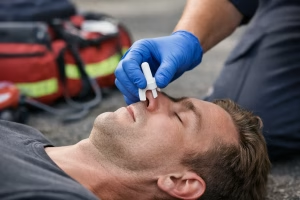
A person who is not waking properly, breathing very slowly, or making gasping sounds may be in a life-threatening opioid overdose. In that situation, naloxone use in drug overdose response can buy critical time, but it is not a substitute for a full emergency response. People still need 999 called, their airway managed, and ongoing monitoring until professional help arrives.
For workplaces, community organisations, event teams and frontline staff, that distinction matters. Naloxone is a practical emergency intervention, but only when people understand what it is for, what it is not for, and how it fits into first aid and pre-hospital care.
Contents
- 1 What naloxone use in drug overdose means in practice
- 2 When naloxone use in drug overdose is appropriate
- 3 How to respond before and after naloxone
- 4 Why training matters
- 5 Workplace considerations and risk assessment
- 6 Limits, risks and common misunderstandings
- 7 Where naloxone fits with first aid and CPR
- 8 Who should learn about naloxone use in drug overdose response
What naloxone use in drug overdose means in practice
Naloxone is a medicine that temporarily reverses the effects of opioids. That includes heroin, morphine, methadone, fentanyl and some prescription pain medicines. It works by displacing opioids from receptors in the brain, which can help restore breathing in someone whose breathing has been dangerously depressed.
The key word is temporarily. Naloxone does not treat every overdose, and it does not remove the need for urgent medical assessment. Some opioids last longer in the body than naloxone does, so a person can improve and then deteriorate again once the naloxone wears off.
That is why naloxone should be seen as one part of an emergency response, not the whole response. In practical terms, responders need to recognise the signs, call for an ambulance early, give naloxone if indicated, support breathing, and continue observing the casualty.
When naloxone use in drug overdose is appropriate
Naloxone is used when opioid overdose is suspected. The strongest indicators are reduced consciousness and breathing problems. A casualty may be very difficult to rouse, have slow or absent breathing, make choking or snoring noises, or have blue or grey lips and fingertips. Pinpoint pupils are often mentioned, but in a real incident they are not always easy to assess and should not delay action.
There is also an operational reality worth stating clearly. You may not know exactly what has been taken. Casualties may have used more than one substance, and bystanders may not have reliable information. If opioid use is suspected and the casualty has signs of overdose, naloxone is generally considered because the immediate priority is breathing.
What naloxone will not do is reverse overdose from alcohol, benzodiazepines, cocaine or other non-opioid drugs on their own. If those substances are involved alongside opioids, naloxone may still help with the opioid element, but the casualty remains high risk.
How to respond before and after naloxone
First aid principles still apply. Check for danger, response, airway and breathing. If the person is not breathing normally, call 999 and start CPR if indicated. If they are breathing but unresponsive, protect the airway and place them in the recovery position where appropriate.
Naloxone should be administered according to the product instructions and your level of training. In the UK, this may be an intramuscular preparation or a nasal spray, depending on what is available. Different products have different directions, so responders should be familiar with the specific device they carry.
After giving naloxone, continue to monitor the casualty closely. If breathing does not improve, or if it improves and then worsens again, further doses may be required in line with training and product guidance. None of this changes the need for ambulance attendance.
A common mistake is to treat naloxone as the finish line. It is not. Once someone starts breathing better or becomes more responsive, they may be confused, agitated or feel unwell. They still need observation because recurrent toxicity is possible.
Why training matters
Naloxone is straightforward to administer, but emergency scenes are rarely straightforward. People panic. Information is incomplete. Casualties may have trauma, vomit, cardiac arrest, environmental exposure or multiple substances on board. In workplaces and public settings, responders also have to manage bystanders, preserve dignity and hand over clearly to ambulance crews.
That is where training adds real value. Good instruction does not simply tell people to give a medication. It teaches scene assessment, recognition of respiratory depression, airway management, recovery position, CPR where required, and the judgement needed to work safely within role boundaries.
For employers, the question is not only whether naloxone can be carried. It is whether staff are trained to use it properly within a wider emergency response plan. That can be relevant in services working with vulnerable groups, certain community settings, event environments, security roles and some outreach functions. It may be less relevant in other workplaces where the risk profile is different.
Workplace considerations and risk assessment
There is no single answer for every sector. A construction firm, a nursery, a leisure facility and a homelessness service will each have different exposure risks and different control measures. Naloxone provision should therefore sit within a sensible risk assessment rather than a blanket policy copied from elsewhere.
In Scotland, some organisations are more likely to encounter opioid overdose because of the people they support, the locations they work in, or the nature of public access to their premises. In those cases, employers should consider whether staff may reasonably be first on scene and whether naloxone training should form part of a broader package of first aid and emergency response measures.
Storage, access, replacement dates and post-incident reporting also matter. A kit that is locked away, out of date, or carried by people with no confidence in using it is not much of a control measure. Procedures need to be practical enough for real use.
Limits, risks and common misunderstandings
Naloxone has a strong safety profile, but there are still practical considerations. It can trigger acute withdrawal in someone who is opioid dependent, which may cause distress, agitation, nausea or aggression. Responders should be prepared for a casualty who wakes confused and upset rather than calm and grateful.
Another misunderstanding is that naloxone proves an opioid overdose. It does not. A response to naloxone can support suspicion, but it is not a complete diagnosis. Equally, a poor response does not rule out opioid involvement, especially if there are very potent opioids, delayed circulation, or severe hypoxia.
There is also a behavioural misconception sometimes raised in public discussion – that having naloxone available encourages drug use. In operational and public health settings, that argument does not stand up well. Emergency equipment exists because life-threatening incidents happen. The purpose is to reduce preventable death while maintaining access to treatment, support and emergency care.
Where naloxone fits with first aid and CPR
From a training perspective, naloxone sits alongside core lifesaving skills rather than replacing them. If breathing is absent or not normal, responders still need to think in terms of airway, ventilatory support where trained, and CPR where indicated. If the casualty is breathing but unconscious, airway protection remains central.
This matters because opioid overdose is primarily a breathing emergency. Naloxone may help reverse the cause, but it does not remove the need to manage the consequence. A responder who can administer naloxone but cannot recognise agonal breathing or maintain an airway is only partially prepared.
That is why many organisations benefit from integrated training rather than a standalone message of simply give the antidote. In practice, the best outcomes come when people understand the whole chain of response.
Who should learn about naloxone use in drug overdose response
The need is strongest for people likely to encounter overdose in the course of their role. That may include support workers, outreach teams, some security and event staff, community volunteers, and organisations working with higher-risk populations. For healthcare and pre-hospital staff, naloxone awareness is usually part of wider clinical training.
For general workplaces, the answer depends on risk. Some employers will decide that standard first aid provision is proportionate. Others may identify a clear operational reason to add overdose awareness and naloxone to their emergency planning. The important point is that the decision should be evidence-based, documented and supported by competent training.
For organisations across Scotland reviewing emergency preparedness, the practical question is simple: if this happened on your site, in your vehicle, or during your service delivery, would your team know what to do in the first five minutes?
A calm, trained response can make those minutes count. Naloxone is a valuable tool, but it works best in the hands of people who understand assessment, airway care, escalation and the realities of managing an overdose scene.