
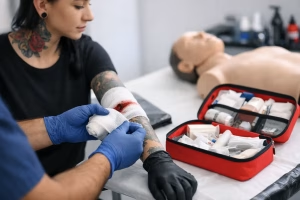
A client goes pale halfway through a long sitting, says they feel sick, and then slides off the chair. That is not the moment to start wondering what your kit contains or whether you remember the recovery position correctly. First aid training for tattoo artists gives studios a practical response plan for the incidents most likely to happen in a treatment room, from fainting and minor bleeding to burns and more serious medical emergencies.
Tattooing is skilled, close-contact work. It involves needles, blood, sharps, disinfectants, long appointments and clients with very different pain thresholds, medical histories and stress responses. Even when hygiene standards are strong and consultation processes are thorough, things can still go wrong quickly. The point of training is not to turn artists into clinicians. It is to make sure they can act calmly, safely and within their role until the situation is under control or further help arrives.
Contents
Why first aid matters in a tattoo studio
Most tattoo artists already take infection prevention seriously. Gloves, cleaning protocols, sharps disposal and cross-contamination control are part of day-to-day practice. First aid sits alongside those controls. It deals with the immediate human response when a client becomes unwell, injured or distressed.
The studio environment brings a specific mix of risks. Vasovagal syncope is common enough that every artist should expect to see it at some stage. A client may faint because they have not eaten, are anxious, are overtired or simply react badly to the procedure. Minor bleeding is routine within the treatment itself, but abnormal bleeding, dizziness or signs of shock require a different level of attention. There is also the possibility of allergic reaction to products, slips on wet floors, burns from hot equipment, and medical emergencies unrelated to tattooing, such as a seizure or cardiac event.
That is why first aid training should be viewed as an operational control, not an optional extra. It supports client safety, protects staff, and helps studios demonstrate a professional standard of care.
What first aid training for tattoo artists should cover
The right course content depends on the studio setup, number of staff and client profile, but the core skills are usually clear. First aid training for tattoo artists should focus on incidents that are realistic in a tattooing environment and teach staff how to assess, respond and escalate.
A strong course will normally include primary survey, calling for help, CPR, use of an AED, choking, seizures, bleeding, burns, shock and the management of an unconscious casualty. For tattoo studios, it is also useful to cover fainting in detail, because that is one of the most likely incidents an artist will face. Training should reinforce scene safety and infection control throughout, especially where blood or sharps are involved.
There is a difference between having a general first aid certificate and having training that makes sense for your workplace. A generic course can still be valuable, but role-specific delivery often improves retention because learners can apply each scenario directly to the studio floor. If the trainer understands the environment, the discussion becomes more practical. Where should the first aid kit be kept? Who meets the ambulance? What happens if the client loses consciousness while positioned awkwardly on a chair? These details matter.
Common incidents in tattoo settings
Fainting is the obvious one, but it should not be the only focus. Tattoo artists should also be prepared for a client who becomes clammy and confused, someone who cuts themselves on entry or exit from the treatment area, or a reaction to aftercare products or cleaning agents. Some clients may attend with underlying conditions such as diabetes, epilepsy or severe allergies. You are not expected to diagnose those conditions, but training helps staff recognise when something is outside normal discomfort and requires prompt action.
Minor burns may also be relevant if studios use heated equipment or hot water. Staff injuries should not be overlooked either. An artist who sustains a sharps injury or a slip in the workspace may need immediate assistance just as much as a client does.
Compliance, competence and public confidence
Tattoo studios operate in a regulated environment, and while first aid requirements may not always be set out in one simple rule for every business, there is a clear duty to manage risk sensibly. A studio that has considered likely emergencies, trained staff appropriately and equipped the premises properly is in a much stronger position than one relying on guesswork.
This is partly about compliance, but it is also about competence. Clients notice whether a business feels organised and professional. They may never ask to see your training certificates, but they will expect safe systems, a prepared team and a calm response if something goes wrong. For studio owners, that can make first aid training part of broader risk management alongside hygiene procedures, consent records, incident reporting and staff induction.
Where studios employ multiple artists, reception staff or apprentices, it is worth deciding who needs training and at what level. In a small single-artist setup, one person may need to hold the relevant skills and maintain their own equipment checks. In a larger studio, it makes more sense to train several people so cover is not lost through sickness, days off or busy appointment schedules.
Choosing the right course
Not every tattoo artist needs the same qualification. It depends on the size of the business, whether you work alone, and the outcomes of your risk assessment. For many studios, a regulated workplace first aid course provides the right foundation. For smaller, lower-risk setups, emergency first aid may be enough, provided it matches the actual risks present.
The key question is whether the course gives staff the confidence to manage the incidents they are most likely to encounter. A certificate on paper is useful, but practical competence matters more. Hands-on training with realistic scenarios, opportunities to ask questions and clear guidance on when to call 999 are all more valuable than theory alone.
For tattoo businesses in Scotland, local delivery can make a real difference. Training held at your premises allows the content to be tailored to your layout, equipment and staffing arrangements. It also avoids taking a whole team out of service unnecessarily. Providers such as SPR Training can deliver accredited first aid courses either from a dedicated training centre or on-site, which suits studios that want sector-relevant instruction without overcomplicating the process.
What to look for in a training provider
Accreditation matters, especially where businesses need recognised certification for insurance, internal policy or regulatory assurance. Beyond that, look for a provider that understands workplace risk rather than offering a one-size-fits-all classroom session. Tattoo studios benefit from training that is direct, practical and realistic.
Ask what level of course is recommended for your setup, how much of the training is hands-on, whether scenarios can be adapted to your environment and how often refresher training should be planned. The best providers will answer plainly and help you match the course to your actual need, not simply sell the longest option.
First aid kits, policies and practical readiness
Training works best when it sits within a simple, usable studio system. That means keeping a stocked and accessible first aid kit, making sure staff know where it is, and checking contents regularly. It also means documenting who the trained first aiders are, what to do in an emergency and when to contact emergency services.
Studios should think through practical arrangements before an incident happens. If a client faints, is there enough space to manage them safely? If an ambulance is needed, can someone guide crews into the building quickly? If there is blood outside normal procedure, do staff know how to clean and dispose of contaminated waste safely? These are straightforward questions, but answering them in advance improves response time and reduces confusion.
It is also worth recording incidents consistently. A simple accident book or incident log helps identify patterns, whether that is clients attending without eating, recurring slip hazards or products that cause irritation. Good records support safer practice over time.
Refresher training is not optional in practice
Skills fade if they are not used. CPR sequences, casualty assessment and even basic confidence can slip surprisingly quickly, particularly in workplaces where serious incidents are rare. That is why refresher training matters. It keeps knowledge current, reinforces correct technique and gives staff a chance to revisit any near misses or concerns that have arisen in the studio.
For tattoo artists, refreshers are also helpful because products, layouts and staffing can change. A studio that has expanded, moved premises or taken on junior staff may need a different emergency plan than it did a year ago. Regular review keeps first aid arrangements proportionate to the business as it stands now.
A well-run tattoo studio should look prepared long before anything goes wrong. First aid training is part of that picture. It supports safer appointments, steadier decision-making and a more professional service for every client who sits in the chair. If your team can recognise a problem early and respond properly, you are not just meeting a standard – you are running the kind of studio people trust.