
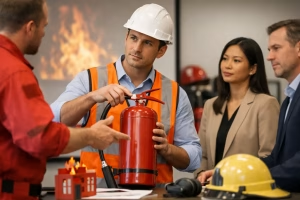
A manager usually finds out their fire training is lacking at the worst possible moment – during an audit, after a near miss, or when they are suddenly expected to lead an evacuation. That is why choosing the top fire safety courses for managers is less about ticking a box and more about making sure the right people can act calmly, lawfully and effectively when it matters.
For some organisations, one course is enough. For others, especially those with higher occupancy, mixed-use premises, sleeping accommodation or practical work risks, managers need a broader set of fire safety responsibilities covered. The right training depends on what the manager is accountable for day to day, how complex the site is, and whether they are expected to supervise staff, support compliance, or take a lead during an incident.
Contents
What managers actually need from fire safety training
Managers sit in an awkward but important position. They are rarely expected to replace a competent fire risk assessor or enforcing authority, but they are often the people asked to implement procedures, brief teams, check standards and respond to concerns before they become incidents.
That means useful training should do more than explain what fire is and how extinguishers work. It should help managers understand legal duties, evacuation strategy, staff roles, alarm response, housekeeping standards, and the practical meaning of a fire risk assessment. If a course leaves someone with theory but no confidence in applying it on site, it has limited value.
In most workplaces, the strongest options combine compliance knowledge with operational decision-making. Managers need to recognise common failings, know when existing controls are no longer suitable, and understand where their responsibility ends and specialist input is required.
Top fire safety courses for managers by role
Fire Marshal or Fire Warden training
For many line managers, supervisors and team leaders, Fire Marshal training is the most obvious starting point. It covers the responsibilities they are likely to hold in practice – raising the alarm, assisting with evacuation, checking designated areas where appropriate, understanding basic fire prevention measures, and supporting emergency procedures.
This course is particularly relevant where managers oversee staff on shift, manage visitor-facing areas, or act as nominated wardens within an evacuation plan. It is practical, widely recognised and usually proportionate for offices, schools, retail, workshops and many standard commercial settings.
The limitation is that Fire Marshal training does not automatically make someone competent to write or review a formal fire risk assessment. It is best seen as operational training for those who need to respond and supervise, rather than specialist training in fire safety management.
Fire Safety Awareness for Managers
Some managers do not need to serve as a warden but still need a clear understanding of legal duties and day-to-day controls. A fire safety awareness course with a management focus can be a sensible option for department heads, office managers, site coordinators and business owners who need to understand their responsibilities without taking on a designated emergency role.
This type of course is often useful where the main risk is poor practice rather than complex fire behaviour – blocked exits, poor storage, damaged doors, inconsistent inductions, or staff who do not know what to do when an alarm sounds. For smaller organisations, it can provide enough knowledge to improve standards quickly.
Fire Risk Assessment training
Where a manager has responsibility for premises, compliance monitoring or safety systems, fire risk assessment training becomes far more relevant. This is often the right route for facilities managers, operations managers, premises managers and those supporting the responsible person with fire safety arrangements.
A good course should explain how to identify hazards, evaluate who may be at risk, assess existing controls, record findings and review arrangements when circumstances change. It should also make clear that complexity matters. A straightforward office unit is one thing. A care setting, licensed premises, industrial site or multi-use building is another.
This is an area where overconfidence can create problems. Training can improve internal awareness and help managers carry out simple assessments where appropriate, but higher-risk premises may still require a more experienced assessor. The best courses make that distinction clearly rather than implying one day of training covers every scenario.
Evacuation and emergency procedures training
In larger organisations, a manager may already understand general fire safety but still struggle with the practical side of drills and emergency coordination. Training focused on evacuation procedures can be especially valuable for senior staff responsible for staged evacuations, PEEP arrangements, assembly management or multi-team communication.
This matters in premises where evacuation is not as simple as leaving by the nearest exit. If the site has mobility considerations, public access, lone workers, sleeping risk, or separate buildings, managers need training that reflects those realities. Generic awareness training often misses that level of detail.
Sector-specific fire safety training
A manager in a small office does not face the same risks as a manager on a construction project, in a warehouse, at a marina or in a childcare setting. Sector-specific fire safety training can therefore be the strongest choice where the environment changes the risk profile.
Construction managers may need stronger emphasis on hot works, temporary accommodation, plant, fuel storage and changing site conditions. Care and childcare managers may need more detail on assisted evacuation, vulnerable occupants and staffing levels. Hospitality managers may require training linked to kitchens, guests, alarm management and out-of-hours procedures.
For businesses with mixed risks, bespoke delivery is often more effective than sending managers on unrelated generic courses. A local provider with experience across different sectors in Scotland can usually tailor content more usefully than a one-size-fits-all package.
How to judge the best course for your organisation
The top fire safety courses for managers are not always the longest or most advanced. They are the ones that match the manager’s level of responsibility and the actual risk profile of the workplace.
Start with the question of role. Is the manager expected to lead an evacuation, monitor fire precautions, support the responsible person, or carry out in-house assessments? The answer points towards a different level of course.
Then look at the premises. A low-risk office with stable occupancy may only need Fire Marshal and awareness-level training. A workshop, factory, nursery, depot or leisure facility may require a stronger practical focus. Where there are vulnerable persons, sleeping accommodation, hazardous processes or frequent layout changes, managers need training that goes beyond general awareness.
It also helps to consider delivery format. Open courses can work well for individual managers who need a recognised qualification quickly. On-site training often works better where multiple managers need the same standard, or where the trainer can use the actual building, routes and procedures as part of the session. That tends to improve retention because staff can relate the learning directly to their own site.
Accreditation, practicality and refresher needs
Managers should be wary of courses that sound comprehensive but are vague on content, certification or trainer competence. Fire safety training should be clear about what standard is being delivered, who it is for, how long it lasts, and what outcomes learners can expect.
Practical relevance matters just as much as certification. A manager should leave knowing what they need to check, what they need to escalate, and what they need to do differently at work the next day. If the course content does not connect to drills, housekeeping, contractor control, alarm response or staff briefings, it may not be enough.
Refresher training is also easy to overlook. Managers change sites, teams grow, buildings are altered, and procedures drift. Even where formal renewal periods differ by course type, a sensible review cycle helps keep standards current. This is especially true after refurbishment, process change, or any incident that exposes weaknesses in the existing plan.
When one course is not enough
Some managers need more than a single fire course. A facilities or operations manager may benefit from both Fire Marshal training and separate fire risk assessment instruction. A senior manager responsible for wider health and safety may also need training in emergency planning, incident management or first aid coordination.
That does not mean piling on certificates for the sake of it. It means building a training profile that fits the responsibilities of the role. In some businesses, spreading knowledge across several managers is better than relying on one person who is absent when needed.
For organisations reviewing their training across multiple sites, it is often worth mapping fire roles properly before booking anything. That avoids paying for advanced courses where awareness is enough, and it prevents the opposite problem – undertraining the people who carry real responsibility.
A practical provider should be able to help employers decide whether a manager needs basic awareness, Fire Marshal instruction, fire risk assessment training, or a more tailored option. For businesses across Scotland, that kind of flexibility is often the difference between compliant paperwork and training that genuinely improves readiness.
Good fire safety training gives managers something more useful than a certificate. It gives them the judgement to spot weak points early, the confidence to lead people clearly, and the sense to know when specialist support is needed.