
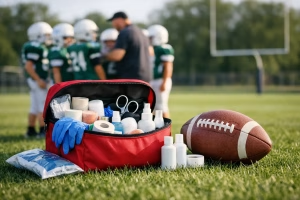
When a player goes down on a wet grass pitch, nobody wants to discover the youth football first aid kit contains little more than a few plasters and an out-of-date ice pack. For grassroots clubs, school teams and volunteer coaches, the kit needs to match the reality of the game – slips, knocks, cuts, nosebleeds, sprains and the occasional more serious incident while waiting for emergency services.
A well-prepared kit does two jobs. It helps you deal with minor injuries quickly and it supports a safer immediate response when something is more significant. It is not a substitute for first aid training, clinical judgement or an emergency action plan, but it is a basic operational requirement for any team responsible for children and young people.
Contents
- 1 What a youth football first aid kit needs to do
- 2 Core contents for a youth football first aid kit
- 3 What not to pack without a clear reason
- 4 Pitchside priorities matter more than brand names
- 5 Adapting the kit to age group and setting
- 6 The role of head injury awareness
- 7 Restocking, expiry dates and accountability
- 8 Training and kit should sit together
What a youth football first aid kit needs to do
Football presents a fairly predictable injury profile. At youth level, most incidents are low to moderate severity – grazes, minor bleeding, bruising, soft tissue injuries and the occasional finger or wrist issue from a fall. Head knocks also need careful handling, even when the child appears settled a few minutes later.
That means your kit should be built around practical pitchside use rather than a generic box bought in haste. You need supplies that can be opened quickly, used outdoors in poor weather and replaced easily during the season. The best kit is not the biggest one. It is the one that covers common needs, stays organised and is checked regularly.
Core contents for a youth football first aid kit
A youth football first aid kit should include gloves, sterile dressings, plasters in assorted sizes, low-adherent dressings, conforming bandages, adhesive tape, saline pods or sterile eyewash, antiseptic wipes suitable for minor wound cleaning, instant cold packs, a foil blanket, scissors, a resuscitation face shield and a basic finger support such as cohesive bandage or a small triangular bandage. A notepad and pen are also useful for recording the incident and any advice given to a parent or guardian.
For clubs supporting regular training and weekend fixtures, it also makes sense to carry extra absorbent dressings for nosebleeds and cuts, spare gloves, hand sanitiser, and a few sealed gauze swabs. If your sessions take place in winter or in exposed areas, a blanket is not optional. Children cool down quickly once they stop moving, especially if they are wet.
Some teams also keep a second bag for welfare and hygiene items such as tissues, spare water, sick bags and spare clothing covers. That can be helpful, but it should not replace the actual first aid kit. Medical items need to be easy to identify and separate from general team equipment.
What not to pack without a clear reason
Overloaded kits can create problems. If coaches have to search through pain relief tablets, muscle sprays, old supports and assorted creams, the response slows down. More importantly, some items raise safeguarding and consent issues when dealing with children.
As a rule, avoid stocking medication unless your club has a clear policy, appropriate permissions and trained people managing it. That includes painkillers. The same caution applies to items that look useful but are not suitable without training, such as advanced airway equipment or specialist trauma products. A grassroots football kit should support immediate first aid, not imitate a clinical response bag.
Ice spray is another item worth questioning. Instant cold packs are generally more controlled and easier to manage. Sprays can be misused, particularly by well-meaning adults trying to get a player back onto the pitch too quickly.
Pitchside priorities matter more than brand names
Clubs often ask which kit to buy, but the more useful question is how it will be used. A good case should be water-resistant, clearly marked, easy to open and small enough to travel to away games. Internal compartments help, but only if they keep dressings and gloves visible rather than buried.
Think in terms of response sequence. Can the coach get gloves on quickly? Is there an absorbent dressing immediately available for bleeding? Can a cold pack be activated one-handed while someone else reassures the child? Can the incident be recorded before details are forgotten? These practical points matter far more than whether the case looks comprehensive on a product listing.
For larger clubs, one central box is rarely enough. If several age groups train at the same time across multiple pitches, each group should have direct access to a suitable kit. The same applies to tournaments and football camps, where injuries may happen away from the changing area or clubhouse.
Adapting the kit to age group and setting
Not every youth football first aid kit will look identical, and that is sensible. A Saturday morning session for under-7s at a local park is different from an under-18s competitive fixture at a club with changing facilities and designated welfare staff.
Younger age groups tend to involve more minor cuts, tears and emotional distress after a fall. In that setting, quick access to simple dressings, gloves and cold packs is usually the priority. Older players may present with more forceful collisions, more significant sprains and a greater need for structured decision-making around head injuries and return to play.
The venue matters too. If there is a long walk from the car park to the pitch, portability becomes important. If mobile signal is unreliable, your emergency procedure needs to account for that. If toilets and clean running water are not nearby, saline and hygiene supplies carry more value.
The role of head injury awareness
No article on youth football first aid is complete without addressing head injuries. A first aid kit cannot diagnose concussion, but it can support the immediate management of a player who has taken a blow to the head or had a heavy fall.
The key issue is not what special item sits in the bag. It is whether the adult in charge recognises red flags, removes the player from participation and follows a clear referral pathway. A cold pack may help with superficial swelling, but it does not make a child fit to continue. If there is any doubt, sit them out and escalate appropriately.
This is where training matters. Equipment is useful, but decision-making protects players. Coaches and club staff should know when to call 999, when to contact a parent urgently and when a child should not return to training that day.
Restocking, expiry dates and accountability
The most common weakness in a youth football first aid kit is not the original contents. It is poor maintenance. Gloves get used and not replaced. Cold packs burst. Dressings disappear into another team bag. Then an incident happens and the kit is incomplete.
Set a simple checking routine. At minimum, inspect the kit before the season starts, midway through the season and after any matchday where it has been used. Clubs with heavy weekly use should check more often. Keep a short contents list inside the case so anyone can see what is missing.
Expiry dates deserve attention, but they should not become the only focus. A sterile dressing that is damaged by moisture or crushed at the bottom of a boot bag is just as much of a problem as one that is out of date. Storage matters. Keep the kit clean, dry and accessible, not locked away in a building that is shut during evening training.
It also helps to assign responsibility. If everyone assumes someone else is checking the kit, nobody is. A named coach, team manager or welfare lead should own the process, even if several people can use the equipment.
Training and kit should sit together
A youth football first aid kit is only one part of readiness. The club also needs people who know how to assess an incident, provide immediate care within their level of training, communicate with parents and emergency services, and document what happened properly.
For football clubs, schools and community organisations, that often means reviewing whether staff or volunteers hold suitable first aid training for the age group and activity. It may also mean considering sports-specific risks, safeguarding responsibilities and how incidents are handed over after the session. Where teams operate regularly, refresher training is worth treating as part of routine risk management rather than an optional extra.
At SPR Training, this practical approach underpins how first aid training is delivered across Scotland – not as theory for a folder, but as skills people can apply when the pressure is on.
A good kit will not stop every injury, and it will not remove the need for sound judgement. What it does do is give coaches and clubs a workable starting point when seconds matter and a young player needs calm, competent help.