
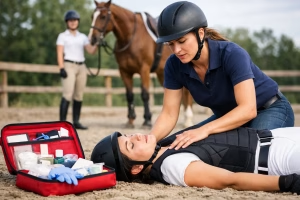
A rider falls at a jump, a horse swings round in the collecting ring, or someone is stepped on while leading in from the field. These are not rare or theoretical situations. First aid for equestrian coaches matters because coaching happens in an environment where speed, height, weight and unpredictability all meet at once, often at a distance from immediate clinical support.
For coaches, first aid is not simply a certificate to file away. It is part of day-to-day risk management, duty of care and professional credibility. Whether you coach children in a riding school, run private lessons from a yard, or support pony club, competition and adult returner sessions, the standard of your emergency response can shape outcomes in the first few minutes after an incident.
Contents
- 1 Why first aid for equestrian coaches needs a sector-specific approach
- 2 The incidents coaches are most likely to face
- 3 What competent first aid for equestrian coaches should cover
- 4 Equipment is useful, but it is not the whole answer
- 5 Compliance, insurance and professional standards
- 6 Choosing the right training for your setting
- 7 Refreshers matter more than many coaches realise
- 8 What good first aid practice looks like on a busy yard
Why first aid for equestrian coaches needs a sector-specific approach
General workplace first aid principles still apply, but equestrian settings create particular challenges. The casualty may be on uneven ground, in mud, beside fencing, near loose horses or in a busy indoor school with limited access. The mechanism of injury also matters. A fall from height, a kick to the torso, a crush injury against a wall, or a suspected spinal injury after rotational fall all require calm judgement rather than rushed action.
This is where many coaches benefit from role-relevant training rather than a basic, generic overview. A course might meet a workplace requirement on paper, but if it does not reflect the actual incidents likely to happen around horses, there can be a gap between compliance and confidence.
Equestrian coaching also involves mixed groups. A coach may be responsible for children, teenagers, adults, volunteers and sometimes parents standing nearby. That changes the scene management piece. You are not only assessing and treating the casualty. You are also controlling horses, directing bystanders, preserving access for emergency services and keeping the rest of the group safe.
The incidents coaches are most likely to face
The most common situations are not always the most dramatic. Falls from horses are an obvious risk, but coaches also regularly see broken bones, sprains, dislocations, concussion, cuts, nosebleeds and bruising after impact. On yards, hand injuries, foot injuries and head knocks can happen while tacking up, loading, leading or turning out.
Some incidents are lower frequency but higher consequence. A kick to the chest or abdomen, a rider who is unconscious even briefly, a suspected neck or back injury, severe bleeding, breathing difficulty after trauma, or a collapse unrelated to riding all need a structured response. In rural parts of Scotland, ambulance response times may vary depending on location and weather, so early care becomes even more significant.
It also depends on the type of coaching you provide. A freelance flatwork coach in a private arena may face different practical issues from a cross-country instructor, pony club organiser or riding school manager. Cross-country, hacking and camp environments increase the chance of delayed access, variable terrain and weather exposure. Indoor schools bring different considerations such as enclosed space, noise and restricted vehicle access.
What competent first aid for equestrian coaches should cover
The foundation is still the same – preserve life, prevent deterioration and promote recovery. However, equestrian coaches need those principles taught in ways that reflect the yard and arena environment.
A useful programme should cover primary survey, CPR, use of an AED, management of unconscious casualties, choking, seizures and severe bleeding. For equestrian settings, it should also give proper attention to head injury, concussion recognition, fractures, soft tissue injury, crush mechanisms and spinal precautions.
Just as important is decision-making. Coaches need to know when not to move a casualty, when a rider should not remount, when emergency services should be called immediately, and how to hand over clear information. A person who appears keen to stand up and continue is not necessarily fit to do so. In equestrian incidents, adrenaline often masks pain and clouds judgement.
Training should also touch on incident recording, parental communication where children are involved, and the practicalities of maintaining control of horses while treatment starts. In many real scenarios, the first minute is less about equipment and more about command of the scene.
Equipment is useful, but it is not the whole answer
A well-stocked first aid kit on site is essential, and many equestrian venues should also consider whether they need more than one due to the spread of the premises. Coaches working off-site may need a portable kit in the car and one carried directly to the arena or field. Depending on location and activity, an AED may also be a sensible part of emergency planning.
That said, equipment does not compensate for poor training. If staff are unsure how to assess a casualty, use protective equipment properly, or communicate under pressure, the kit remains just a box on the wall. The same applies to emergency action plans that exist only in paperwork. They need to be workable in the actual setting.
A practical approach is to review where incidents are most likely to happen and where equipment can be reached quickly. A kit locked in the office is of limited value if a rider comes off at the far end of a cross-country course.
Compliance, insurance and professional standards
Not every equestrian coach is covered by exactly the same legal duties. A self-employed freelance coach has different arrangements from a riding school employing staff, and both differ again from clubs relying on volunteers. Still, the expectation is consistent – if you are responsible for people in a risk-bearing activity, you should be able to respond appropriately in an emergency.
Insurers, venue operators, governing bodies and parents increasingly expect evidence of current first aid competence. For coaches working with children, safeguarding and welfare expectations make this even more relevant. In some settings, paediatric elements may also be worth considering alongside standard workplace first aid content.
This is one of the reasons sector-specific training is valuable. It helps organisations show that they have considered the actual risks of the role rather than choosing the cheapest or shortest option available. That does not always mean the longest course is the best course. It means the training should fit the level of risk, the age groups coached, the remoteness of the venue and the structure of the business.
Choosing the right training for your setting
There is no single course that suits every equestrian coach. If you work in a commercial riding school with several staff and regular client turnover, a regulated workplace first aid course may be appropriate, supported by scenario-based equestrian content. If you coach children, paediatric first aid may also be relevant depending on your responsibilities. If you operate in more remote or higher-risk environments, enhanced outdoor or pre-hospital elements may be worth adding.
The quality of delivery matters as much as the syllabus title. Coaches tend to learn best when training includes realistic case examples, practical casualty handling discussions and honest treatment of what can and cannot be done before paramedics arrive. A trainer who understands outdoor workplaces, sport settings and incident command will usually add more value than a classroom-only approach detached from the reality of yards and arenas.
For organisations across Scotland, flexible delivery can make a difference. On-site training allows staff to work through their own venue layout, access points, emergency contacts and known hazards. That often leads to stronger retention because the learning is tied directly to the place where incidents would happen.
Refreshers matter more than many coaches realise
Skills fade if they are not used. Even experienced coaches can hesitate over CPR sequence, concussion signs or the management of a casualty who should not be moved. Refreshers help keep response times short and judgement clear.
They also provide a chance to revisit equipment, update contact procedures and test whether your emergency plan still makes sense. Has the yard layout changed? Is the gate access still suitable for ambulance crews? Do all staff know the exact address and postcode to give? These details sound small until an emergency happens.
Providers such as SPR Training often support this with accredited first aid courses, role-specific options and private delivery for clubs, yards and coaching teams that need practical training matched to their operating environment.
What good first aid practice looks like on a busy yard
Good practice is usually quiet and organised. The coach stops the activity, secures the horse, allocates simple tasks, assesses the casualty and avoids creating more risk through panic or unnecessary movement. They know what information to gather, what signs to monitor and when escalation is needed.
They also understand the limits of first aid. Not every problem can be solved at the scene. Sometimes the right call is to keep the casualty still, keep them warm, monitor them closely and wait for clinical support. In other cases, prompt CPR or bleeding control makes the difference.
For equestrian coaches, that balance of confidence and restraint is the standard to aim for. Good first aid is not dramatic. It is competent, timely and appropriate to the incident in front of you.
If you coach around horses, first aid should sit alongside safeguarding, tack checks and risk assessment as part of normal professional practice. The right training does more than meet a requirement. It helps you make better decisions on a difficult day, when riders and families need you to be clear, calm and prepared.