
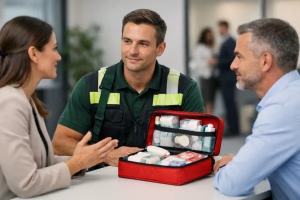
A workplace can have a first aid box on the wall, an incident book at reception and a policy in a folder, yet still be poorly prepared when someone collapses, cuts a hand badly or suffers a medical emergency on shift. That is why employers regularly ask how to choose first aider cover properly. The right decision is not just about sending one willing member of staff on a course. It is about matching trained people to your risks, your workforce and the way your business actually operates.
Contents
- 1 How to choose first aider cover starts with risk
- 2 Appointed person or trained first aider?
- 3 The best first aider is not always the nearest volunteer
- 4 Availability matters as much as qualification
- 5 Match the course to the setting
- 6 Consider credibility, accreditation and refreshers
- 7 Personal qualities to look for when you choose a first aider
- 8 How to choose first aider numbers without guessing
- 9 Build first aid into operations, not just compliance
How to choose first aider cover starts with risk
If you are working out how to choose first aider provision, begin with a first aid needs assessment. In practice, this means looking at the hazards in your setting, the number of people on site, your working patterns and how quickly emergency services could reach you.
A low-risk office with a small day team will usually need a different level of provision from a construction site, forestry operation, gym, nursery or workshop. If staff work alone, travel between sites or operate in remote areas, that changes the picture again. The same applies if you regularly deal with members of the public, children, vulnerable adults or service users with known medical needs.
This is where some employers make the wrong call. They choose a first aider based only on availability or cost, rather than on the realities of the workplace. Compliance matters, but first aid arrangements also need to work under pressure.
Appointed person or trained first aider?
Before selecting individuals, be clear on the level of cover you need. An appointed person is not the same as a qualified first aider. An appointed person can take charge of first aid arrangements, call the emergency services and look after equipment, but they are not a substitute for trained first aid personnel where training is required.
Where your assessment shows that a trained first aider is needed, you then need to decide what qualification fits. For many workplaces, that will mean Emergency First Aid at Work or First Aid at Work. Other settings may need paediatric first aid, outdoor first aid, basic life support or a more specialist course linked to the environment and likely incidents.
The correct answer depends on risk, not preference. A school trip leader, a factory supervisor and a marine instructor may all need first aid training, but not necessarily the same certificate.
The best first aider is not always the nearest volunteer
A willing volunteer is useful, but willingness on its own is not enough. When choosing who should take on the role, look for people who can stay calm, follow procedures and communicate clearly in a stressful situation.
A good first aider does not need a clinical background. They do, however, need sound judgement and the confidence to act. In many workplaces, the strongest candidates are dependable team members who are present consistently, know the site well and are trusted by colleagues. In other settings, it may make sense to spread responsibility across supervisors, reception staff, site leads or duty managers so cover is available where incidents are most likely to happen.
Physical capability may also matter. A first aider may need to kneel for CPR, assist a casualty safely or manage a scene until further help arrives. That does not mean excluding people unnecessarily, but it does mean being realistic about the demands of the role.
Availability matters as much as qualification
One of the most common gaps in first aid planning is assuming a single certificate equals full cover. It does not. If your only trained first aider works part-time, takes regular site visits, covers multiple departments or is often on annual leave, your provision may fall short.
When deciding how to choose first aider numbers, think in terms of actual availability. Consider shift patterns, night work, lone working, peak periods, holiday cover and absence. A business with twenty staff on paper may need more trained people than expected if those staff are spread across locations or work irregular hours.
You should also think about where incidents are most likely to happen. In a warehouse, cover may be needed on the floor rather than only in the office. In a school or nursery, trained staff may need to be placed around classrooms, outdoor areas and trips. In a sports environment, the person with the qualification needs to be pitch side or court side, not somewhere else in the building.
Match the course to the setting
The question is not simply who should be the first aider. It is also what kind of training they need. This is where sector knowledge matters.
For a lower-risk workplace, Emergency First Aid at Work may be suitable. For higher-risk settings or organisations with more significant hazards, First Aid at Work may be the better fit. If staff work with infants and children, paediatric first aid is often the relevant requirement. If teams operate outdoors, in forestry, in equestrian settings or on remote sites, an outdoor-focused course may be more appropriate than a standard classroom-based workplace option.
Some employers need a blended approach. A nursery manager may need paediatric cover, while facilities staff still require workplace first aid. A marine business may need both general first aid awareness and specialist emergency response training linked to its operating environment. Choosing well means looking at likely incidents, not just the course title.
Consider credibility, accreditation and refreshers
A certificate should be current, recognised and appropriate to the role. That sounds obvious, but it is worth checking carefully, particularly where businesses rely on training completed some time ago or arranged informally.
First aid skills fade if they are not refreshed. Even experienced staff benefit from updates in CPR, AED use, casualty assessment and incident management. In high-turnover sectors or operational environments where standards need to be evidenced clearly, scheduled refresher planning is just as important as the initial course.
For employers, the training provider also matters. Look for recognised accreditation, clear course information and delivery that reflects the workplace context. A generic course may tick a box, but training is more effective when examples, scenarios and equipment reflect the sector involved.
Personal qualities to look for when you choose a first aider
When selecting individuals, there are a few qualities that tend to make a practical difference. The best first aiders are usually calm under pressure, reliable with attendance, comfortable speaking to emergency services and able to follow a process. They also tend to be people who take responsibility seriously without becoming flustered.
There is a balance to strike. A very senior manager may hold the qualification but be unavailable when needed. A new starter may be enthusiastic but not yet embedded in site routines. A long-serving employee may know everyone and everything, but may not want the responsibility. It depends on the team, the setting and the real day-to-day operation of the business.
For some employers, it is sensible to ask for volunteers first and then select from that group based on suitability. For others, particularly in higher-risk settings, first aid responsibilities may need to be assigned formally to ensure proper coverage.
How to choose first aider numbers without guessing
There is no single figure that suits every workplace. Staff numbers are one factor, but they should never be viewed in isolation. A small but higher-risk site may need stronger provision than a larger low-risk office. Equally, a business spread across several units may need more trained people because help cannot be delivered quickly from one central point.
Your assessment should take account of hazard level, layout, public access, distance from emergency medical support, vulnerable groups and previous incident history. If your team carries out physical work with machinery, vehicles, tools or chemicals, that points towards more robust provision. If work is largely desk-based and well supervised, the requirement may be lower, though not absent.
The practical test is simple. If an incident happens at your busiest or most difficult time, will a trained person be immediately available? If the answer is uncertain, your first aid cover probably needs strengthening.
Build first aid into operations, not just compliance
The strongest first aid arrangements are built into normal operations. Staff know who the first aiders are, where kits and AEDs are kept, how to report an incident and what happens out of hours. New starters are briefed. Cover is reviewed when teams change. Expiry dates are tracked before they become a problem.
That operational approach is often what separates effective provision from paper compliance. Training should not sit apart from the business. It should support real decisions on staffing, supervision and emergency response.
For organisations across Scotland, that may also mean choosing a provider that can deliver workplace courses at your premises, adapt training to your sector and help you align qualifications with your actual risks. That is often more useful than selecting a standard course without reviewing whether it truly fits.
Choosing a first aider is ultimately about trust. You are deciding who will step forward in the first few minutes of an emergency, before an ambulance arrives and before the situation feels under control. Take the decision seriously, match training to the environment, and choose people who can do the job when it counts.