
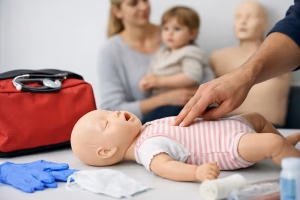
If your paediatric first aid certificate is close to expiry, leaving the renewal too late can create a real operational problem. Nurseries, childminders, schools, sports settings and activity providers often need valid cover in place at all times, so knowing how to renew paediatric first aid is as much about continuity and compliance as it is about booking another course.
The good news is that renewal is usually straightforward. The detail that matters is whether your certificate is still valid, which course standard your setting accepts, and whether your role calls for a full requalification or a shorter update alongside existing competence.
Contents
- 1 How to renew paediatric first aid without gaps
- 2 Check what your workplace or regulator actually requires
- 3 When to book your renewal
- 4 What to expect from a renewal course
- 5 Choosing the right provider
- 6 Records, certificates and internal planning
- 7 Common mistakes to avoid
- 8 A practical way to stay current
How to renew paediatric first aid without gaps
In most cases, renewing a paediatric first aid certificate means completing a recognised course again before the current certificate expires. Unlike some awareness-based training, first aid qualifications are time-limited because practical skills fade and guidance can change. CPR ratios, emergency planning, choking procedures and incident management all need to stay current.
For many childcare professionals, the benchmark is a 12-hour paediatric first aid course that meets the requirements set by the Early Years Foundation Stage in England. In Scotland, settings may not be working to EYFS specifically, but employers, insurers, governing bodies and local procedures still tend to expect current, accredited paediatric first aid certification that is appropriate to the role.
That means renewal is not just a case of showing an old certificate and asking for an extension. You normally need to attend training, complete the practical elements and meet the assessment standard again.
Check what your workplace or regulator actually requires
Before booking anything, confirm what standard is expected in your setting. This is where people can come unstuck. “Paediatric first aid” is sometimes used as a general term, but different sectors can mean slightly different things by it.
A nursery manager may need staff to hold a full 12-hour paediatric first aid certificate. A sports coach working with children may only need training that covers emergency first aid relevant to supervised activities, depending on their governing body, risk assessment and venue arrangements. A childminder may need a course accepted by their registration body or insurer. Healthcare staff may already hold broader clinical resuscitation training, but still need a specific paediatric first aid qualification for non-clinical childcare duties.
If you are renewing on behalf of a team, check four points before you book: the awarding body or accreditation required, the course duration, whether face-to-face practical assessment is necessary, and the expiry date of each current certificate. This avoids paying for training that does not meet the standard your organisation actually needs.
When to book your renewal
The best time to renew is before expiry, with enough margin to cope with staff holidays, sickness or course availability. A common mistake is waiting until the final week, then finding there is no suitable date locally or no places left on a course.
As a practical rule, start checking renewal dates around three months in advance. That gives enough time to organise attendance and keeps you clear of last-minute gaps in certified cover. For employers with several staff members, spreading bookings across a few dates can help maintain staffing levels while keeping compliance in place.
If a certificate has already expired, you may still be able to requalify immediately, but you should not assume the certificate remains valid during that gap. From an employer’s point of view, the difference between “booked on” and “currently certificated” matters.
Can you renew after your certificate expires?
Yes, but that is usually a requalification rather than a seamless renewal. In practical terms, you attend and complete the relevant course again. The issue is not whether you can train after expiry – you can – but whether your setting can legally or operationally accept that lapse in the meantime.
For childcare providers and employers with safeguarding responsibilities, even a short gap can cause staffing and ratio issues. That is why forward planning matters more than the wording on the certificate.
What to expect from a renewal course
If you are wondering how to renew paediatric first aid in a way that is actually useful, look beyond the certificate alone. A good renewal course should revisit the core emergencies you may have to manage with babies and children, and it should test those skills in a realistic, practical way.
That normally includes primary survey, recovery position, CPR, use of an AED where appropriate, choking, bleeding, shock, seizures, allergic reaction, asthma, minor injuries, burns, fractures and medical emergencies affecting infants and children. Depending on the course and awarding body, you may also cover meningitis awareness, febrile convulsions, anaphylaxis and incident recording.
Renewal training also gives experienced staff a chance to correct habits that have drifted over time. Someone who has worked in childcare for years may feel confident, but confidence is not always the same as current competence. Practical reassessment is there for a reason.
Is online renewal enough?
It depends on the certificate required. Some blended formats are acceptable, where theory is completed online and practical assessment takes place face to face. Fully online paediatric first aid is often not suitable where a regulated or workplace-recognised practical certificate is needed.
For roles involving direct responsibility for babies and young children, employers usually want hands-on training. They need evidence that learners can perform CPR, manage choking and respond under pressure, not just answer theory questions on a screen.
Choosing the right provider
When renewing any regulated first aid qualification, the provider matters. Price and convenience are part of the decision, but they should not be the only factors. You need a course that is recognised, delivered by competent instructors and suitable for your sector.
Look for clear information on accreditation, course duration, assessment method and certificate validity. If you are booking for a nursery, school, club or business, ask whether the training can be delivered on site and whether the provider can accommodate group bookings. For employers across Scotland, that flexibility can make a significant difference to staffing and travel time.
A local provider with experience across childcare, education, sport and workplace first aid will usually be better placed to answer practical questions than a generic booking platform. SPR Training, for example, delivers accredited first aid training from its Airdrie base and on client premises across Scotland, which can be useful for organisations needing compliant group delivery rather than individual ad hoc bookings.
Records, certificates and internal planning
Renewal is not finished when the course ends. Employers should update training records, store certificates securely and note the new expiry dates straight away. This sounds basic, but many avoidable lapses happen because nobody has a reliable system for tracking qualifications.
For smaller organisations, a shared spreadsheet may be enough if someone is responsible for checking it monthly. Larger teams often need a more formal training matrix. Either way, the aim is the same: you should know who is qualified, what level they hold and when each certificate expires.
It is also worth checking whether enough staff are trained for actual operational cover, not just for paper compliance. If only one member of staff on a shift holds current paediatric first aid and they call in sick, the organisation may still have a problem. Renewal planning works best when it is tied to rota resilience, not just course administration.
Common mistakes to avoid
The most common issue is assuming any first aid certificate will do. It may not. Emergency First Aid at Work, Basic Life Support and paediatric first aid are not interchangeable qualifications, even if there is some overlap in content.
The second mistake is treating expiry dates as flexible. They are not. Once a certificate runs out, you may no longer be able to count that individual as currently qualified for the purpose required.
The third is choosing a course based only on cost. A cheaper course that does not meet your regulator, insurer or employer requirement is not cheaper in the end. It means paying again and potentially facing a period without compliant cover.
Finally, avoid leaving renewal to the individual employee if the qualification is business-critical. Where a certificate is required for the role, employers should monitor and plan renewals centrally.
A practical way to stay current
If you want the simplest answer to how to renew paediatric first aid, it is this: check the requirement for your role, book a recognised course before expiry, complete the practical assessment, and record the new certificate properly. That covers the process.
The wider point is that paediatric first aid should never become a last-minute admin task. In any setting where babies and children are present, current training supports quicker decisions, calmer responses and safer outcomes when something goes wrong. Book early, choose carefully, and keep your cover strong enough to work in practice as well as on paper.