
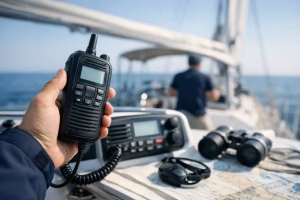
A handheld radio is no use if the person holding it does not know how to make a clear distress call. That is why a guide to RYA VHF certification matters for anyone using marine radio in UK waters. Whether you skipper a yacht, support a club launch, work in marine instruction or simply want to operate a fixed or handheld VHF set legally and confidently, the Short Range Certificate is the recognised starting point.
Contents
- 1 What RYA VHF certification actually is
- 2 Who needs the certificate
- 3 A guide to RYA VHF certification for beginners
- 4 What you will learn on the course
- 5 How the assessment works
- 6 How long it takes and what to expect on the day
- 7 Common mistakes candidates make
- 8 Choosing the right training provider
- 9 What the certificate gives you after passing
- 10 Is RYA VHF certification worth it?
What RYA VHF certification actually is
RYA VHF certification usually refers to the RYA Short Range Certificate, often shortened to SRC. This is the qualification for operating marine VHF radio fitted with Digital Selective Calling, commonly known as DSC. In practical terms, it gives you the knowledge to use marine radio equipment correctly, understand the right channels and procedures, and respond properly in routine, urgent and emergency situations.
For most leisure boaters, club safety boat crews and many marine staff, the SRC is the relevant certificate. It is also widely treated as the standard proof of competence when hiring vessels or operating on boats fitted with VHF equipment. The course is not just about passing a test. It is about reducing confusion at sea, where poor radio use can waste time or create risk for other vessels and rescue services.
Who needs the certificate
If you intend to transmit on a marine VHF radio, there is a strong chance you need the certificate. That applies whether the radio is fixed on board or carried as a handheld set. It is particularly relevant for skippers, crew who may need to make calls, sailing instructors, powerboat users, rescue boat volunteers and club members operating support craft.
There is sometimes confusion here. Owning a radio, being on a boat with a radio, and being trained to use it are not the same thing. In many cases, the vessel also requires the correct radio licence, while the operator needs the appropriate certificate. One does not replace the other.
If you never touch the radio and will not be expected to make calls, the qualification may not be essential for you personally. Even then, it is often sensible. On small craft and training boats, roles change quickly. If the nominated operator is injured, busy or overboard, someone else may need to call for assistance without hesitation.
A guide to RYA VHF certification for beginners
For beginners, the main concern is usually whether the course will feel too technical. In most cases, it does not. The syllabus is designed for practical users rather than radio engineers. You do not need a specialist background, but you do need to pay attention to procedure, terminology and radio discipline.
The course typically covers how VHF and DSC work, the phonetic alphabet, distress, urgency and safety calls, routine communication, radio checks, weather broadcasts and the use of channels. You will also learn what information to give in an emergency and how to avoid blocking important traffic with poor practice.
The technical side is there because it matters, but it is taught in an operational way. The key question is not how every internal component functions. It is whether you can pick up the set, choose the correct channel, structure the call properly and send the right message under pressure.
What you will learn on the course
A good SRC course balances legal knowledge, procedure and hands-on use of the equipment. Expect teaching on Mayday, Pan Pan and Securite calls, as well as routine marina or inter-ship traffic. You should also be introduced to DSC alerting, including why accidental alerts are a problem and how to deal with them correctly.
Another important area is message discipline. Marine radio is not casual chat. Calls need to be brief, accurate and made on the right channel. Students often find that the challenge is not the radio itself but remembering the order of information and using standard wording without overcomplicating it.
Training should also cover practical scenarios. A man overboard, engine failure, medical concern, tow request or deteriorating weather all require slightly different communication. The best learning happens when those scenarios are rehearsed until the process feels straightforward.
How the assessment works
The RYA SRC includes an assessment rather than a separate large written exam in the way some candidates expect. There is normally a short written or theory element alongside a practical assessment using radio equipment. You will be asked to demonstrate correct calling procedures for a range of situations.
That practical format suits the subject. Marine radio is a working skill. You are being assessed on whether you can use the set properly, not just whether you can recall definitions from a manual. Most candidates who attend a properly delivered course, take part fully and revise the key procedures perform well.
Nerves are common, especially among first-time candidates or people returning to study after many years. In practice, the assessment is manageable when the course has been structured clearly. It helps to treat the day as skills training with assessment built in, rather than imagining a formal classroom test designed to catch you out.
How long it takes and what to expect on the day
The course is commonly delivered over one day, although formats can vary depending on provider and pre-course study arrangements. Some centres require online learning or handbook preparation before attendance. Others combine most of the teaching and the assessment within the same training day.
What matters is not only the timetable but the quality of delivery. Because radio procedure involves specific phrasing and sequence, rushed teaching does not help candidates. A well-run course gives time to hear examples, practise calls aloud, ask questions and work through common mistakes before assessment begins.
Bring photographic identification if your provider requests it, arrive ready to participate, and expect to speak during practical exercises. This is not a course where you can sit quietly at the back and absorb everything by osmosis.
Common mistakes candidates make
The most frequent errors are procedural rather than technical. Candidates may select the wrong channel, miss part of the message format, speak too fast, or include unnecessary detail. Others know the procedure in theory but lose the sequence once they have a microphone in hand.
Another issue is mixing up urgency and distress traffic. A Mayday call is reserved for grave and imminent danger. Pan Pan is for urgent situations that do not yet meet that threshold. Knowing the difference matters, because misuse can create confusion for other stations and emergency services.
Candidates also sometimes underestimate DSC. It can look intimidating at first, but the logic becomes clearer once the buttons and alert structure are explained properly. Avoiding false alerts is a key part of competent use.
Choosing the right training provider
If you are comparing providers, look beyond price alone. The course should be delivered by an RYA-recognised centre with a clear assessment process, suitable equipment and instructors who teach the subject in a practical, operational way. For clubs, commercial operators and watersports organisations, it is also worth checking whether private group delivery is available.
Location and convenience matter, especially for teams travelling from across Scotland, but they should not outweigh training quality. A shorter journey is useful. A course that leaves candidates unsure of emergency procedure is not.
For employers and organisations, the best option often depends on numbers and operational need. An individual booking onto an open course may only need flexibility and a recognised certificate. A sailing club or marine business may need group training arranged around launch schedules, seasonal staffing or compliance requirements.
What the certificate gives you after passing
Passing the SRC gives you recognised evidence that you can operate marine VHF radio equipment correctly. That can support legal compliance, improve onboard safety and increase confidence in real situations. It also gives skippers and organisations more assurance that radio traffic will be handled properly if something goes wrong.
The certificate is not a substitute for seamanship, navigation skill or emergency judgement. It sits alongside those competencies. A calm radio operator who can send a correct distress message is valuable, but so is a crew that can assess the incident, give accurate position details and manage the immediate problem on board.
For many candidates, the biggest benefit is confidence. Before training, people often avoid using the radio for fear of getting it wrong. After proper instruction, they are far more likely to make the call promptly and correctly.
Is RYA VHF certification worth it?
For most active boat users, yes. The cost and time involved are modest compared with the practical value of the qualification. If you operate in busy coastal waters, support events, teach on the water or crew vessels where radio is part of normal safety equipment, the SRC is hard to argue against.
There are edge cases. Someone who never transmits, stays on vessels where another qualified operator is always present, and has no intention of taking responsibility for communications may not see an immediate need. Even then, marine safety rarely improves by relying on one person only.
A practical course delivered by an experienced training centre gives more than a certificate. It gives a method for communicating clearly when clarity matters most. If your boating, club or work role includes any likelihood of using a marine radio, getting properly trained is a sensible step and one that tends to prove its value the first time the set is needed for real.