
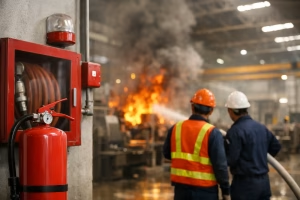
A small fire in a factory rarely stays small for long. Heat, dust, packaging, solvents, machinery and shift work can turn a minor incident into a serious operational and safety failure within minutes. That is why fire safety for factories has to be treated as a live part of day-to-day management, not a folder on a shelf.
Factory environments bring together ignition sources, combustible materials and complex layouts in a way that offices do not. You may have welding in one area, battery charging in another, flammable liquids in a store, and pallets stacked near dispatch. Add contractors, agency staff, night shifts and production pressures, and the risk picture changes quickly. A compliant approach matters, but practical control matters more.
Contents
- 1 Why fire safety for factories needs a site-specific approach
- 2 The main fire risks found in factories
- 3 Fire prevention starts with routine control
- 4 Detection, warning and escape arrangements
- 5 Training staff to respond properly
- 6 Managing compliance without losing sight of reality
- 7 When specialist support makes sense
Why fire safety for factories needs a site-specific approach
There is no single factory fire plan that suits every premises. A food production unit, timber workshop, engineering plant and textiles facility all present different hazards. Even two similar sites can vary because of building age, compartmentation, housekeeping standards, staffing levels and maintenance arrangements.
That is where some businesses get caught out. They rely on generic procedures, standard induction slides and a few extinguishers on the wall, then assume they are covered. In reality, effective fire safety depends on whether your controls match what actually happens on the shop floor. The right question is not simply whether a measure exists, but whether it works under real operating conditions.
A proper fire risk assessment should identify ignition sources, fuel sources and the people at risk, then test whether current precautions are proportionate. In a factory, that often means looking closely at hot works, electrical loading, process heat, extraction systems, waste handling, storage arrangements and escape routes that may be narrowed by stock or equipment. The assessment also needs to reflect changes in production, not just the original building layout.
The main fire risks found in factories
Most factory fires begin with a combination of ordinary issues rather than a dramatic single failure. Poor housekeeping, overloaded electrics, poorly controlled hot work, machinery faults and unsafe storage all feature regularly.
Combustible waste is a common problem. Cardboard, shrink wrap, timber offcuts, oily rags and process residues can build up surprisingly quickly, especially during busy periods. If waste is left near heat sources or electrical equipment, the chance of ignition rises. If it is stored in escape routes or against the outside of the building, a smaller fire can also spread further and affect evacuation.
Machinery brings another layer of risk. Bearings overheat, motors fail, belts slip and dust can settle in hidden spaces. Preventive maintenance is therefore part of fire safety, not just an engineering concern. Where extraction systems are in use, they need regular inspection and cleaning, because accumulated dust can become a serious ignition and spread hazard.
Charging points for forklifts, powered pallet lorries and other battery-operated equipment also need attention. Ventilation, charging practices, segregation and condition checks matter. The same applies to flammable liquids and aerosols. It is not enough to keep them on site carefully; quantities, storage cabinets, decanting procedures and staff awareness all need to be right.
Fire prevention starts with routine control
Prevention is usually more effective than response. In a factory setting, that means putting control into routine tasks rather than relying on people to remember best practice only when something goes wrong.
Housekeeping should be structured, assigned and checked. If combustible waste waits until the end of a shift, you may be carrying unnecessary risk for hours. Cleaning standards should include hidden areas around plant, service voids and extraction points, not just visible walkways. Storage should be organised so that stock does not creep into protected routes or reduce access to fire points and shut-off controls.
Electrical safety needs the same discipline. Portable appliances, fixed installations and machine connections all need suitable inspection, testing and defect reporting. Temporary fixes have a habit of becoming permanent in busy workplaces. Damaged plugs, trailing leads and overloaded sockets are still found far too often.
Hot work is another area where a permit-to-work system makes a real difference. Welding, grinding, cutting and roofing works need formal control, particularly when contractors are involved. That includes checking the work area, removing combustibles, assigning fire watch duties and confirming a safe handover after the task is complete. The trade-off is time and administration, but it is minor compared with the consequences of an avoidable fire.
Detection, warning and escape arrangements
Good fire safety for factories depends on more than preventing ignition. If a fire does start, people need early warning and a clear way out.
Alarm systems should be suitable for the building size, layout and noise level. In a louder production environment, an alarm that would be perfectly adequate in an office may not be enough. Visual alerts may be needed in some areas, and lone or isolated workers may need additional arrangements. The same principle applies to detectors. The right coverage depends on your processes and building use, not on a one-size-fits-all approach.
Escape routes need regular checks because factory layouts tend to shift over time. Temporary storage becomes semi-permanent, production lines are altered and equipment is moved. A route that looked clear on the original plan can become difficult to use under pressure, particularly in low visibility or if staff are unfamiliar with that part of the site.
Fire doors must close properly and remain unobstructed. They are often compromised for convenience, airflow or access. That may seem minor until compartmentation is needed. If a fire spreads beyond its point of origin, evacuation becomes harder and damage increases quickly.
Emergency lighting should also be assessed realistically. If a power failure affects a site during early morning, evening or winter operations, staff still need to move safely. Testing should be recorded, but more importantly, faults should be acted on without delay.
Training staff to respond properly
A written procedure is only useful if people understand it and can apply it. In factories, staff turnover, shift patterns and mixed experience levels can make that harder than expected.
Every worker should know the alarm signal, escape routes, assembly point and how to report concerns. Beyond that, appointed fire marshals or wardens need more detailed instruction. They should understand sweep procedures, typical site hazards, evacuation support, and what to do if part of the factory is inaccessible or affected by smoke.
Extinguisher training also needs to be handled sensibly. Staff should not be encouraged to tackle fires beyond the earliest safe stage. The purpose of training is to improve judgement as much as technique. People need to recognise when an extinguisher is appropriate and when immediate evacuation is the only safe option.
Refresher training matters because factories change. New lines, revised storage, new contractors and changes in occupancy can all affect the emergency plan. For employers across Scotland, practical, accredited workplace fire training delivered on site can be the most effective option because it reflects the actual environment staff work in.
Managing compliance without losing sight of reality
Legal duties are part of the picture, but box-ticking is not enough. Records, maintenance logs, drill reports and risk assessments all matter, yet they only support safety if they reflect genuine practice.
A useful test is to walk the site as if an alarm had just activated. Can every exit be opened quickly? Do supervisors know who is on shift? Would a visitor or contractor know where to go? Are there people who may need assistance? These questions often reveal gaps that paperwork alone will miss.
Senior management involvement is important here. If production targets always override maintenance windows, housekeeping time or training attendance, the fire risk will increase no matter how good the written policy looks. The best-performing sites usually treat fire safety as part of operational control rather than a separate compliance exercise.
When specialist support makes sense
Some factories have the internal competence to manage assessments, drills and staff development well. Others need external support, especially where processes are higher risk or arrangements have grown piecemeal over time.
That support might involve fire marshal training, review of emergency procedures or site-specific staff instruction. For many employers, the most useful training is practical and role-based rather than generic. SPR Training works with organisations across Scotland that need accredited, workplace-relevant safety training delivered in a format that fits real operations.
Fire safety in a factory is never finished. Buildings change, people change and production changes. The sensible approach is to keep reviewing what could start a fire, what would help it spread, and whether your staff could respond calmly and correctly if the alarm sounded today.