
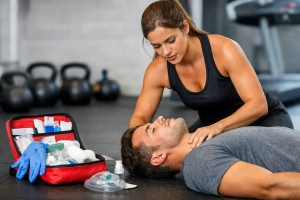
A client collapses halfway through a circuit block, another catches a shin on a box jump, and someone in the corner goes pale and confused after a hard session. That is why first aid for personal trainers is not a nice extra or a box-ticking exercise. It sits alongside coaching skill, risk awareness, and duty of care.
Personal training is hands-on, fast-moving work. You may be operating in a commercial gym, a private studio, a park, a bootcamp setting, or a client’s home. The risks change with the environment, the equipment, and the client group, but the expectation stays the same. If something goes wrong, you need to respond quickly, calmly, and appropriately until further help arrives.
Contents
- 1 Why first aid matters in personal training
- 2 What first aid for personal trainers should cover
- 3 The incidents personal trainers are most likely to face
- 4 Compliance, insurance, and professional standards
- 5 Choosing the right first aid course for PTs
- 6 What good first aid practice looks like day to day
- 7 Why refreshers matter
- 8 First aid for personal trainers is part of the job
Why first aid matters in personal training
Personal trainers work with people under physical stress. In many cases that stress is planned and well managed. In some cases it reveals an underlying issue, aggravates an existing condition, or leads to an injury that needs immediate attention.
That does not mean fitness is unsafe. It means the role carries predictable risks. Clients may present with known health conditions such as asthma, diabetes, epilepsy, high blood pressure, previous cardiac issues, or musculoskeletal injuries. Others may appear fit and well but still experience dizziness, chest pain, collapse, allergic reaction, or a sudden deterioration during exercise.
A trainer with recognised first aid training is better placed to assess the situation, protect the casualty, and make sensible decisions. That includes knowing when to continue monitoring, when to stop a session, when to ask for assistance, and when to call 999.
For self-employed PTs, there is also a professional credibility point. Clients want reassurance that their trainer is prepared. Gyms, studios, sports clubs, and insurers may also require evidence of current certification.
What first aid for personal trainers should cover
The right course content depends on your setting and client base, but first aid for personal trainers should always be practical. You need skills you can apply in the moment, not just theory you can repeat in a classroom.
At a minimum, personal trainers should understand how to conduct a primary assessment, place a casualty in a safe position where appropriate, and identify life-threatening conditions. CPR and use of an AED are central. In a fitness environment, those skills matter because sudden cardiac arrest can happen without much warning, and early intervention improves outcomes.
You should also be able to manage common training-related incidents. These include sprains and strains, minor bleeding, head injuries, fainting, seizures, choking, asthma attacks, and diabetic emergencies. A sound course will also address shock, burns, spinal considerations, and how to monitor a casualty while waiting for the ambulance service.
If you deliver outdoor sessions, bootcamps, or remote training in parks and rural spaces, your needs may be broader. Weather exposure, delayed access for emergency services, slips on uneven ground, and longer casualty care times all change the picture. In that case, a more outdoor-focused first aid option may be more suitable than a basic indoor course.
The incidents personal trainers are most likely to face
Most emergencies in personal training are not dramatic trauma cases. They are everyday incidents that still need competent management.
Musculoskeletal injuries are common. A client may twist a knee during a lunge pattern, strain a shoulder under load, or aggravate a lower back problem during a deadlift variation. Good first aid helps you reduce further harm, support the injured area, and decide whether the person can mobilise safely or needs further assessment.
Fainting and dizziness are also familiar in training spaces. Dehydration, low blood sugar, overexertion, anxiety, heat, or an underlying medical issue can all be factors. The response is not simply to get the person back on their feet. You need to assess what has happened, monitor them properly, and recognise red flags.
Chest pain, breathing difficulty, and collapse are less common, but they are the incidents where training makes the biggest difference. Delays, uncertainty, or poor decision-making can cost valuable time.
There is also the issue of client disclosure. Not every person tells their trainer everything. Some minimise symptoms, forget medication, or do not mention a condition because they do not see it as relevant. That is one reason first aid knowledge must sit alongside proper screening, informed consent, and session planning.
Compliance, insurance, and professional standards
There is no single rule that applies to every personal trainer in every setting, but relying on that gap is poor practice. If you coach people through physical activity, you should have current first aid training that reflects your operational risks.
Many employers, leisure operators, and governing bodies expect valid certification. Insurers may also ask whether you hold an appropriate first aid qualification. If your work includes one-to-one sessions with higher-risk clients, small group training, or independent operation without immediate support on site, that need becomes even more obvious.
The practical question is not whether first aid is worthwhile. It is whether your current qualification is recognised, in date, and relevant to what you actually do.
A generic low-contact online certificate may not give you the confidence or practical competence needed in a live emergency. Hands-on training with assessed CPR, AED use, casualty positioning, and scenario-based response is generally a better fit for fitness professionals.
Choosing the right first aid course for PTs
Not every course is designed with personal trainers in mind, so selection matters.
For many PTs working in gyms, studios, and indoor classes, an Emergency First Aid at Work course is a sensible starting point. It covers essential life-saving interventions and common workplace incidents. For those with broader responsibilities, larger teams, or a wider duty of care, a more comprehensive First Aid at Work course may be appropriate.
If you coach children or family sessions, paediatric first aid may also be relevant. If you operate outdoors, train endurance groups, or work in settings where access to help may be slower, an outdoor-specific course can offer a better match. The point is to align the qualification with the environment, not just the cheapest or shortest option available.
When comparing providers, look for recognised accreditation, clear course outcomes, and practical assessment. Good training should leave you able to act, not just able to say you attended.
What good first aid practice looks like day to day
Training is only part of the picture. Day-to-day readiness matters just as much.
A personal trainer should know where the first aid kit is, whether an AED is available, how to summon help within the venue, and what the address is for emergency services. That sounds basic, but it is often overlooked, especially by freelance coaches moving between sites.
You should also have a simple process for recording key medical information, emergency contact details, and incident reports. That does not need to be overcomplicated, but it should be secure, current, and easy to access when needed.
Pre-session checks help too. If a client looks unwell, reports unusual symptoms, or seems significantly below par, the answer may be to modify the session or stop altogether. Good trainers do not push through warning signs to protect a booking slot.
Equipment and environment play a part as well. Clear walkways, sensible loading, safe spacing between stations, hydration planning, and heat management all reduce the chance of an incident escalating. First aid starts before anyone gets hurt.
Why refreshers matter
First aid skills fade when they are not used. That is normal. CPR sequences, recovery position technique, AED prompts, and casualty assessment all become less automatic over time.
That is why refreshers and requalification matter for personal trainers. They keep knowledge current, improve confidence, and allow you to practise realistic scenarios. They also help you stay aligned with current guidance and workplace expectations.
For trainers who coach regularly, refreshers are not just about compliance. They are part of professional maintenance, in the same way you would update programming knowledge or review coaching standards.
Providers such as SPR Training deliver accredited first aid courses that can be matched to different working environments across Scotland, including workplace and more specialist settings. For PTs, that matters because the best course is the one that reflects the risks you actually manage.
First aid for personal trainers is part of the job
A strong session plan, good coaching cues, and technical knowledge all matter. So does being ready when a client is injured, becomes unwell, or needs urgent help.
First aid does not make you a clinician, and it does not remove all risk from physical training. What it does is give you a clear framework for responding properly under pressure. For personal trainers, that is not separate from the job. It is one of the clearest signs that you take client welfare seriously.