
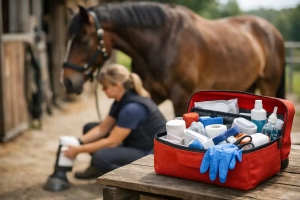
A knocked head in the stable, a crush injury at the gate, a rider thrown in the school, a laceration from damaged fencing – equine yard first aid needs are rarely theoretical. They sit in working environments where heavy animals, machinery, uneven ground and lone working can turn a routine day into an emergency very quickly.
For yard owners, managers and instructors, the key point is simple. A first aid kit on a shelf is not the same as first aid readiness. In an equestrian setting, what matters is whether your people can recognise risk, reach the right equipment quickly, and respond in a calm, structured way while waiting for emergency services if needed.
Contents
- 1 What makes equine yard first aid needs different?
- 2 Start with risk, not just equipment
- 3 The essentials every yard should have
- 4 Training is the part that often gets missed
- 5 Equine yard first aid needs during public activity
- 6 Common weaknesses on equestrian sites
- 7 Matching provision to the real level of risk
- 8 Building a practical first aid culture on the yard
What makes equine yard first aid needs different?
Most workplaces carry some level of first aid risk, but an equine yard combines several hazards at once. There is the size and unpredictability of the horse, the physical nature of handling, vehicle and trailer movement, sharp tools, dust, weather exposure and regular activity around members of the public, clients or young riders.
That mix changes what first aid provision should look like. A low-risk office model does not translate well to a busy yard. Staff may be spread across arenas, grazing, stables and hacking routes. Mobile phone signal may be inconsistent in some rural areas. Access for an ambulance can be delayed by locked gates, poor weather or difficult track surfaces. These are practical planning issues, not minor details.
Equine work also creates a wider range of likely injuries. Minor cuts and splinters happen, but so do fractures, head injuries, heavy bleeding, sprains, suspected spinal injury, crush trauma and medical emergencies unrelated to horses, such as asthma attacks, cardiac events or seizures. A realistic approach to equine yard first aid needs has to account for all of that.
Start with risk, not just equipment
The most effective first aid arrangements begin with a yard-specific risk assessment. That means looking at how the site operates day to day rather than relying on a generic checklist.
A small private yard with one or two experienced handlers will have different needs from a riding school with liveries, visiting farriers, children on site and instructors teaching throughout the day. The number of people present, their experience level, whether they work alone, and how quickly outside help can reach them all affect the level of provision required.
You should also consider the pattern of incidents most likely in your setting. If your team regularly loads horses, handles young stock, works at height in storage areas, or travels off-site to events, those tasks increase the need for practical first aid competence and clear emergency procedures. If members of the public are frequently present, that adds another layer of responsibility.
The essentials every yard should have
When people talk about equine yard first aid needs, the conversation often jumps straight to contents lists. Equipment does matter, but it needs to be accessible, maintained and suited to the site.
At a minimum, yards should have clearly marked first aid supplies, accident reporting arrangements and a means of contacting help. Dressings, bandages, gloves, eyewash where appropriate, sterile wipes and items for managing bleeding and minor injury are standard, but the exact contents should reflect the risks identified. If the site is large, one central box may not be enough. It is often more practical to position kits in key locations such as the yard office, indoor school and horsebox or site vehicle.
Cold packs, foil blankets and additional trauma dressings may also be sensible depending on the activity on site. That said, equipment should never give a false sense of security. A well-stocked kit is useful only if staff know where it is, what it is for and when escalation is needed.
Signage matters more than many yards realise. In an emergency, especially where part-time staff, freelancers or visitors are involved, people need to identify first aid points quickly. Emergency contact details, site address information and clear directions for ambulance access should be displayed where they can be read under pressure.
Training is the part that often gets missed
The gap on many yards is not goodwill. It is confidence. Staff may know they ought to help, but not know how to manage an unconscious casualty, severe bleeding or a suspected fracture safely.
That is where training becomes central to equine yard first aid needs. The right course depends on the level of risk, staffing structure and the roles people carry out. A riding school, trekking centre or competition venue may need more than basic awareness, particularly where there is a duty of care to clients and children. Smaller yards may still require designated first aiders if staff work in physical roles with meaningful risk exposure.
Practical, regulated first aid training gives people a method. It helps them assess the scene, protect themselves, prioritise life-threatening issues and communicate effectively with emergency services. It also reduces the common problem of hesitation, where staff lose valuable time because they are unsure whether they are allowed to intervene.
For equestrian settings, scenario-based learning is especially useful. A casualty on muddy ground is different from a casualty in a classroom. The same applies to managing space around a distressed horse, preserving access routes and keeping other people back. Training that reflects operational reality is always more valuable than theory alone.
Equine yard first aid needs during public activity
The first aid requirement changes again when a yard opens its gates to lessons, pony days, clinics or events. Once members of the public are involved, incident management must be more structured.
You may need to consider designated first aid cover during organised sessions, supervision ratios, access to emergency medication where relevant, and clear responsibilities for staff. If children are present, safeguarding and parental communication procedures should sit alongside your first aid arrangements.
It is also worth thinking about how incidents are managed in front of others. A visible, calm response protects the casualty, reassures clients and supports business continuity. Confusion at the scene can increase risk. Staff do not need to become pre-hospital specialists, but they do need to understand their role and operate within it.
Common weaknesses on equestrian sites
Across practical training environments, the same issues tend to appear repeatedly. The first is outdated supplies. Dressings go missing, gloves are used and not replaced, and nobody checks expiry dates. The second is poor access. Kits are locked away, moved between buildings or buried under paperwork.
The third is overreliance on one person. If only one member of staff knows what to do, your provision is fragile. Annual leave, sickness, shift patterns and staff turnover all affect resilience. It is usually better to build a wider baseline of competence across the team rather than placing all responsibility on a single experienced employee.
Another weakness is failing to plan for remote areas. A fall on a hacking route or in a field away from the main yard creates delays and communication challenges. Staff should know how to give accurate location information, who meets the ambulance, and what immediate actions are realistic before help arrives.
Matching provision to the real level of risk
There is no single template for every stable yard, and that is why a measured approach matters. Some businesses will need formal workplace first aid cover based on staff numbers and hazard level. Others may need broader emergency planning because they host lessons, events or vulnerable groups. The point is not to overcomplicate the issue, but to avoid underestimating it.
A sensible standard is to ask whether your current arrangements would still work on a wet winter evening, with reduced staffing, a blocked access point and an injured casualty some distance from the yard office. If the answer is no, that tells you where improvement is needed.
For Scottish yards, there can also be location-specific considerations. Rural access, weather conditions and travel time for ambulance crews can all influence what good preparedness looks like. That does not mean replacing emergency services. It means being ready to bridge the gap safely and competently until they arrive.
Building a practical first aid culture on the yard
The strongest first aid setups are not complicated. They are visible, current and practised. Staff know where equipment is kept, who the trained first aiders are, how to call for help and what information to provide. Incidents are recorded properly, and near misses are treated as a prompt to improve systems.
A short review after any accident can be as valuable as formal paperwork. Did people find the kit quickly? Was access clear? Did emergency services receive accurate directions? Did staff feel equipped to help? These are useful operational questions because they turn incidents into learning rather than simply disruption.
Where extra support is needed, accredited training can close the gap effectively. For equestrian businesses that need recognised, practical delivery, providers such as SPR Training can tailor first aid instruction to workplace risk and on-site realities across Scotland.
Good first aid provision on an equine yard is not about ticking a box for inspection. It is about making sure that when something goes wrong, your team can respond with enough skill, equipment and clarity to protect people until the next stage of care takes over.