
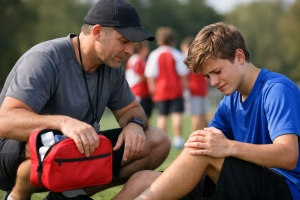
A player goes down, stays down, and everyone looks at the coach first. That moment is why the question – do sports coaches need first aid certification – matters in practical terms, not just administrative ones. In many coaching environments, first aid training is not simply a nice extra. It is part of safe delivery, sensible risk management, and, in some settings, a clear requirement from governing bodies, employers, facilities, or insurers.
Contents
- 1 Do sports coaches need first aid certification in the UK?
- 2 Why first aid matters in a coaching role
- 3 When first aid certification is likely to be required
- 4 What the law actually says
- 5 Do volunteer coaches need first aid certification?
- 6 Which first aid course is suitable for a sports coach?
- 7 What clubs and employers should assess
- 8 Certification is not the whole answer
- 9 A practical standard for coaching organisations
Do sports coaches need first aid certification in the UK?
The short answer is that it depends on the sport, the setting, the age group, and who the coach is working for. There is no single UK-wide rule stating that every sports coach must hold the same first aid certificate. However, many coaches do need first aid training because the organisation they work with requires it, the venue expects it, or the risk level of the activity makes it difficult to justify operating without it.
For example, a self-employed fitness instructor running low-risk adult classes in a hired hall may not be under the same level of formal requirement as a coach leading junior rugby sessions, equestrian lessons, outdoor activity programmes, or contact sport training. Even where the law does not name the coach specifically, the duty to provide a safe environment still sits with employers, clubs, event organisers, schools, and activity providers. In practice, that often leads to first aid certification being expected of coaching staff.
For coaches working with children, the case is stronger again. Parents, schools, clubs, and local authorities rightly expect staff responsible for young people to be able to respond to common injuries and medical emergencies. A coach may be the nearest competent adult when a participant suffers a head injury, asthma attack, severe bleeding, fracture, or cardiac event.
Why first aid matters in a coaching role
Coaching is an active, front-line role. Unlike some workplaces where the first aider may be in another room or another department, coaches are usually the first person at the scene. They supervise movement, manage risk, and make decisions quickly. That means first aid competence supports the job itself.
Sport also creates a broad mix of injury patterns. Minor sprains and cuts are common, but coaches may also face concussion concerns, collapse due to heat or exertion, allergic reactions, dislocations, spinal precautions following impact, or an unresponsive casualty. The right training helps a coach recognise what is happening, take immediate action, and hand over effectively to emergency services if needed.
There is also a safeguarding dimension. A club that places adults in charge of children or vulnerable participants should be able to show that it has considered foreseeable emergencies and trained staff appropriately. First aid certification is part of that picture, alongside supervision ratios, reporting procedures, and risk assessments.
When first aid certification is likely to be required
A coach is more likely to need a recognised first aid certificate when working in organised or regulated settings. That includes employment by schools, leisure trusts, local authorities, sports clubs, governing body programmes, outdoor providers, and commercial training businesses. In those cases, first aid is often written into staff competency requirements, booking conditions, or operating procedures.
Higher-risk sports increase the expectation. Contact sports, martial arts, horse riding, cycling, watersports, climbing, and field-based activities all present a greater chance of injury or delayed access to help. Even where a dedicated medical team is present on match day, the coach may still need first aid training for sessions, travel, warm-ups, and smaller events.
Insurance should not be overlooked. Some insurers expect clubs and providers to have appropriately trained personnel on site. If an incident occurs and no one present holds suitable first aid certification, that can create difficult questions about planning, competence, and duty of care.
What the law actually says
This is where many people want a simple yes or no, but the legal position is usually based on risk rather than job title. Under health and safety law, employers must make adequate and appropriate first aid provision for employees. Good practice often extends that provision to participants, visitors, and members of the public, especially in sport and physical activity settings.
If a coach is employed, the employer should assess the risks of the activity and decide what level of first aid cover is needed. That assessment should take account of the number of participants, the ages involved, the nature of the sport, the venue, travel time for emergency services, environmental conditions, and the history of injuries or medical issues.
For self-employed coaches and volunteer-led clubs, the wording of the law may differ from a straightforward workplace model, but the operational reality remains the same. If you are responsible for sessions where injury or illness is reasonably foreseeable, first aid provision is part of running the activity properly.
Do volunteer coaches need first aid certification?
Quite often, yes. Volunteer status does not remove the risks of the session. Grassroots clubs across Scotland rely heavily on volunteers, and many of those volunteers are supervising children, organising training, or taking teams to fixtures. If they are the responsible adult on site, first aid training is difficult to treat as optional.
That said, the right level of certification may vary. A volunteer assistant helping under close supervision in a low-risk environment may not need the same qualification as the lead coach running sessions independently. Clubs should avoid a blanket approach and instead match training to actual responsibilities.
Which first aid course is suitable for a sports coach?
This depends on the coaching environment. For many indoor and community-based settings, an Emergency First Aid at Work course can be an appropriate starting point. It covers core life-saving skills and common workplace incidents, and it gives coaches a recognised foundation.
Where the role involves higher risk, larger groups, remote environments, or more substantial responsibility for participants, a fuller First Aid at Work qualification may be more suitable. Coaches working with very young children may need paediatric content. Outdoor instructors and forest school providers often need training that reflects delayed emergency access, environmental exposure, and injury management away from immediate support.
The point is not to collect the longest certificate available. It is to choose training that fits the actual hazards of the role. A boxing coach, a swimming teacher, a football coach for under-8s, and an outdoor activity leader are all coaches, but the first aid demands on them are not identical.
What clubs and employers should assess
Before deciding whether sports coaches need first aid certification, clubs and employers should review how sessions are delivered in practice. Who is present? How quickly can emergency help arrive? Are participants children or adults? Is there contact, speed, height, water, animals, equipment, or uneven ground involved? Is the coach working alone, travelling with teams, or supervising in places where the site first aider is not always nearby?
A sound risk assessment usually makes the answer clearer. If the coach may be first on scene and responsible for immediate action, formal training is usually the sensible standard. If another qualified first aider is always present and accessible, the coach may not need the same level of certification, although awareness training still adds value.
Certification is not the whole answer
A valid certificate matters, but so does confidence, refreshers, and realistic practice. Skills fade if they are not used. Coaches benefit from periodic updates, especially in CPR, use of an AED, concussion awareness, severe bleeding, and casualty management during sport.
Clubs should also look beyond the certificate itself. First aid kits need to be available and appropriate to the activity. Emergency action plans should be written and understood. Coaches should know how to summon help, direct ambulance access, record incidents, and communicate with parents or guardians where relevant. Good first aid provision is a system, not a single document.
A practical standard for coaching organisations
If you run a club, employ coaches, or commission sports delivery, the safest position is usually to treat first aid certification as role-dependent but strongly expected. That is particularly true for anyone leading sessions, working with children, coaching higher-risk sports, or operating in venues where immediate medical support is not guaranteed.
For individual coaches, first aid training does more than satisfy a policy. It improves decision-making under pressure and supports professional credibility. Participants notice when a coach is calm, prepared, and competent. So do parents, employers, and insurers.
At SPR Training, we see this most clearly when organisations stop treating first aid as a box-ticking exercise and start matching training to the real conditions their coaches face. That approach is usually better for compliance, better for confidence, and better for participant safety.
If you are still weighing it up, ask a simple question. If an incident happened at your next session, would the people in charge be trained to deal with the first few critical minutes? If the answer is uncertain, that is usually your next action decided.